
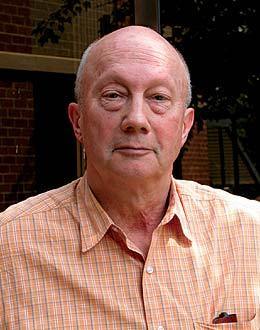
Jason Hartman starts the show with a listener question about COVID and real estate investing. He answers whether or not it’s a good time to start or continue expanding your portfolio. Then he looks at Apple’s latest valuation of $2 trillion. In the interview section of the show, he welcomes Phil Harvey. They discuss his recent book, Wealth for the Rich. The conversation goes into ways tax dollars are being spent irresponsibly. One example he gives is billionaires getting million-dollar payouts and various loopholes.

Announcer 0:02
Welcome to the creating wealth show with Jason Hartman. You’re about to learn a new slant on investing some exciting techniques and fresh new approaches to the world’s most historically proven asset class that will enable you to create more wealth and freedom than you ever thought possible. Jason is a genuine self made multimillionaire who’s actually been there and done it. He’s a successful investor, lender, developer and entrepreneur who’s owned properties in 11 states had hundreds of tenants and been involved in thousands of real estate transactions. This program will help you follow in Jason’s footsteps on the road to your financial independence day. You really can do it. And now here’s your host, Jason Hartman with the complete solution for real estate investors.
Jason Hartman 0:54
Welcome to Episode 1533 1533 speakers from 189 countries worldwide. Our guest today will be Phil Harvey, who is going to talk about the human cost of welfare. Yes, the human cost of welfare and welfare for the rich. If you are not upset about this, you should be because it’s absolutely ridiculous. So we’ll dive into that today with our guests. And I would highly recommend that I recommended this a long time ago, shortly after I had watched this documentary, but check out a documentary called poverty Inc. Poverty, Inc. I believe as the name I think I’m remembering that correctly. Very, very interesting. Just really makes you think about charity in new ways. Because our guest today is the founder and former president of one of the largest charities in the world that implements all sorts of family planning help in developing countries. Where it is sorely needed not needed in the US. It’s a whole different issue. It’s amazing how imbalanced this stuff is and in different places around the world. So we’ll get into that in a few minutes. But tonight, and by the time you hear this, it may have already happened. But for those of you purchased VIP tickets for our meet the Masters virtual conference tonight is our first of the two VIP follow up implementation sessions. So I’m very excited about that prepping for it right after this. A little bit more preparation, and that’ll just be in a few hours this evening. So that should be a lot of fun. Look forward to seeing you all there on zoom. We sent you emails with the login link, and we sent you text messages as well. So we look forward to seeing you tonight. Also, our live stream is on Sunday. Coffee talk with Jason and guests. That will be this Sunday 8am Pacific. Bring your guns Coffee and 11am, Eastern on Sunday. Look forward to seeing all of you there, get your questions answered. You know, what was some great content for you as well? And speaking of questions, we have a listener question from Scott, Scott says is now a good time to start investing in real estate. He says, I heard Jason in a podcast when he said that waiting might be better. We have done this with our decision to buy a personal residence as well. So I guess what you’re saying, Scott is you’re you’ve waited to buy a personal residence. If waiting is the answer. Can you point me to some resources to prep and I guess learn more about investing? You say you are a public school teacher in New Jersey, with a pension that you’re vested into for 13 years? And I know you can’t give advice on this necessarily, but in your opinion, would it be a good idea to take a loan from the pension For funds to purchase real estate, even if the arbitrage is slightly upside down? Well, that’s interesting. First off my question. Well, the first thing I want to say about this, Scott is, I did say that beginning investors and we work with investors on a wide spectrum. Some are experienced investors, who are buying dozens and dozens of properties. Some are brand new investors. And during the, I guess, the darkest days of the pandemic concerns and the question about, you know, where are we going, what is happening? Nobody knows. I did say that beginning investors who have just put together enough money to buy their first one or two properties should wait. And, you know, everything would be just as good in terms of an opportunity in a month or two, but the view about the future would be clear at that time. Well, that has cleared, the smoke has cleared. And we have a much, much better idea of what’s happening and where we’re going now. Certainly nobody can predict the future. But I would certainly say that new investors are fine and dandy, they can start investing in real estate now. So I don’t think that’s a problem. I think the opportunity is fantastic at the moment, the interest rates are incredibly low. As you know, I did that analysis last week of how the cost of these properties on a monthly payment basis has actually declined. And right now, you get a 70% increase in buying power from your rich uncle Jerome Powell, Chairman of the Federal Reserve. So he’s all of our rich uncle. And so our rich uncle has given us a gift and hey, we should use it. It’s a it’s a great time, no question about it. It’s not going to be easy though. I must tell you inventory is very scarce. It’s in short supply. And you’d need to be working with our investment counselors to find the right deals, the deals that make sense, we will help guide you to that through that. And of course, you can reach out to them through the Jason hartman.com. website. And if you’re in the US, you can call us at one 800 Hartman. Again, that’s a US only number for worldwide listeners, just reach out through the website, and we’ll get you taken care of. As for your question about the arbitrage? Well, I don’t know if the arbitrage is upside down. And I guess what you’re saying there, Scott is, you know, maybe there’s an interest rate that you pay to borrow money from your retirement plan. I’m just not sure the specifics, because you didn’t you didn’t say in your message to us. So why would that arbitrage be upside down? Here’s the way I would evaluate that. If you can earn 15 2025 30% when you consider the multiple dimensional return on investment in the income property. And you can go and learn more about how that’s calculated at Jason Hartman, calm the free video, the 27 minute video, right on the front page of our website is really the best primer. And if you watch that video once in six months has gone by, you should watch it again. I’m not kidding, that is a foundational video that tells you how to analyze a deal. Okay, very, very important. Also for newbies, remember, I don’t mention it much. But we do have a quick start podcast that is really geared toward new investors. And you can look that up as well just on any podcast platform type Jason Hartman quickstart and I’m sure you’ll find that no problem. But if you can get the money out of your retirement plan for a rate maybe if you’re paying a penalty, or you’re paying interest to borrow it, I think don’t know the details of your plan, or what, but you’re probably just paying that interest to yourself, in essence, because you’re borrowing it from yourself, and you are getting that money to be safe. At a total cost all things considered of less than 10 or 15%, then the arbitrage is is very much in your favor, and I think you should borrow the money. Some people even believe you should just liquidate your plan that these plans aren’t that good and really, I don’t think they’re that good honestly. Tom wheelwright, the rich dad, author, speaker at our meet the Masters conference last year in Newport Beach, California, and Garrett Sutton, who has spoken at many of our conferences been on the show many times another rich dead author. They both think that their retirement plans are just really not worth it. All things considered that you can make more money outside of them, even though you don’t get the tax benefits and remember, income property is already A tax efficient vehicle. So I’m kind of in the middle. I don’t necessarily completely agree with him that those plans are a bad deal. But I don’t think they’re as good as many people say. I’ll say that much about it. So take that for what it’s worth as far as resources. Hey, this podcast, my YouTube channel, the live streams every Sunday. Our live events Oh, by the way, so many of you and thank you for your interest. By the way, I really love that you’re, you’re so interested in this have been asking, when will the recordings of meet the Masters be available? Many of you purchase them already. And you’ve been waiting for them patiently. And you know, we just want to do these nicely for you. Our producer says they will be finished today today. So all we have to do after that is get them posted on a platform so you can easily access them. There are over 30 different recordings were all Also ripping that recording. So you not only have the video, but you have the audio. Because the audio is portable, we want to make this really convenient, you know, we don’t have to do any of this, we didn’t have to edit them, we didn’t have to categorize them, put them in chapters, make them nice and easy to access, we could have just given you the raw stuff. But you know, I just don’t like that when I buy a product like that. I just think, you know, that’s cheesy, they should make some effort. So, you know, we’ve spent a lot of time and money producing these so that they’re nice, convenient. You can access them in the audio and the video format. They’re categorized, they’re they’re titled, everything’s going to be nice for you to access. So we should have that all loaded into the platform. Maybe over the weekend or early next week, we’ll announce that for you and for those of you who want to purchase them, we should have those available for you next week as well. So we’ll share that link for you and you can get a hold of them some more Really good stuff. They’re really good stuff. And by the way, many of you have asked, you know, can you hear the asset protection webinar? The estate planning webinar, the tax saving webinar? Yes. Jason hartman.com slash asset, Jason hartman.com slash asset. Take advantage of that. And you’ve also asked about the funding webinar. And that’s it. Jason Hartman, there’s my dog. Do you hear that? She moves like a cow. I don’t know if you can hear that. It’s the fucking My dog is so loud when she sits down. It’s like, oh, plops down. I never heard anything like it. Other dogs did not do that. This one. It’s really funny. Anyway, anyway, I don’t know if you can hear that or not, but I sure heard it. The funding webinar, where you can get up to $250,000 in credit, business credit available for your business for Your real estate investing whatever. That’s just easy. It’s Jason hartman.com slash fund. Jason hartman.com slash fun. If you’d like to access any of our other webinars on the Sweet Home Alabama market profile, Southwest Florida market profile, the Florida Georgia market profiles, Jacksonville, Florida, just ask your investment counselor and they’ll be happy to give you those links. And, and we’ve also got a webinar on rent insurance, self directed IRA and 1031 exchange as well. So all of those resources available to you just reach out to our investment counselors. They’ll be happy to provide that info for you. So Scott, I hope that answers your question. Let me see if I can just cover one more thing before our guests. Oh, this was interesting. Apple just passed the $2 trillion market cap the $2 trillion valuation mark and the Wall Street Journal had an interesting comment on that. And here’s what it says I quote Okay, quote, all a $2 trillion valuation really means is that Apple investors are now willing to pay twice as much for the same earnings outlook, unquote. Now that was in the Wall Street Journal. And I find that to be a fascinating thing, because if anything is a sign of a bubble, it is that exact situation. Here’s why. You’ve heard me talk over the years about the greater fool theory. And the greater fool theory is about speculative idiots gamblers, not investors, they’re not investors. They’re just gamblers speculators, really people making very stupid financial decisions. And amazingly, really intelligent, educated people who you think would know better. They get caught up in these manias, too. Okay, remember, what is it my commandment number 22? I believe I’m not looking at them. Thou shalt avoid manias. Okay. You know, we saw the Airbnb thing become a mania and I predicted it was a mania. That’s when I, that’s when I invented that commandment. And I set it on the radio right, you know, last early last year after our venture Alliance retreat in Savannah, Georgia. I said, Thou shalt avoid manias. And this is a stock market mania. Okay. I mean, why would an investor pay twice as much when no fundamentals have changed for the company? They have the same fundamentals they had when they had a $1 trillion valuation. I’m not saying that Apple’s stock won’t increase and the company won’t become more valuable over time. Sure, it probably will if they have another home run if the asset shortage continue. News etc, etc. Sure, but these fundamentals have not changed. It’s the same deal it was when the stock was half the price. You get it? It’s the greater fool theory. What is the greater fool theory say? It says, no matter what I pay for this asset, this stock this property, this cryptocurrency, this Bitcoin, this gold ounce of gold, no matter what it is right? No matter what the asset is, no matter what I pay some greater fool will come along and pay more. Ladies and gentlemen, that is not investing. That is a mania. It’s the mob mentality. It’s, it’s just silliness. It’s stupid, okay. And so many investors come to that exact type of thing. Remember, commandment number five the Property must make sense the day you buy it, or the asset, whatever the asset is, doesn’t have to be a property. But we like properties the best obviously over here. So commandment number five really is Thou shalt not gamble. And the subtitle is the property must make sense the day you buy it, or you don’t buy it. Now, we are seeing a speculative mania form in some of these cyclical markets, but it’ll be temporary. I can say that with absolute certainty, but it’s going on a little bit, because these interest rates are so incredibly low. And it’s just silliness. Okay, don’t get caught up in that. I remember reading this article in OC Metro magazine when I lived in Newport Beach, California, and it talked about how Orange County was having a high rise condo, boom. Now those of you who’ve been to Orange County orange on the Riviera, a very wealthy place. I lived there for Much of my adult life in 2011 when I escaped the Socialist Republic of California, and by the way, we have a lot more to talk about, about what’s going on in California. Leslie Appleton young, the chief economist of California or chief economist of the California Association of Realtors, for I don’t know, she’s been there for a couple decades, at least. I mean, I met her in the 90s 25 years ago, probably when she spoke at the Association of Realtors there in Orange County. And even she thinks it’s a bubble. I interviewed her last week. And so we’ll have that interview. Maybe next week, we will publish that interview for you. And we talked for about an hour and interesting. Leslie Appleton young, the chief economist of the California Association of Realtors. Guess where she moved to Florida? Yes, you heard that right. I couldn’t believe it either. Alright, gave her a hard time about it. Before we started the interview, she lives in Sarasota, Florida. And it’s just, yeah, they’re doing everything they can to drive people out of that state. I, you know, but but whatever. I remember reading this article about the high rise condo boom in Orange County, which Orange County’s not very high rise ish, but they were building a few of them back then. And there was this guy on the cover, and he was this investor, quote, unquote. And I just wonder what happened to that guy. Obviously, he went broke. Okay, because, you know, his investments went down the tubes, they were terrible. They were speculative, and high rise condos. Just never a good idea for so many reasons we’ve discussed over the years, but yeah, very, very interesting, folks. All right. So don’t be the greater fool. Don’t ever buy into the greater fool theory. It’s not a good idea. Good idea. We’re all about investing. We do prudent conservative things that makes sense here. That’s what we’re here to help you with. Without further ado, let’s get to our guest. It’s my pleasure to welcome Phil Harvey to the show. He is the author of five books, including welfare for the rich. That’s his newest work, how your tax dollars end up in millionaires pockets and what you can do about it. And also his last book, which is the human cost of welfare, how the system hurts people it is supposed to help. So welcome. How are you?
Phil Harvey 19:33
I’m well, it’s good to be here.
Jason Hartman 19:35
Good. It’s good to have you on and you’re coming to us from outside Washington DC area. Right? That’s right. Excellent, excellent. Well, what is going on with the system and how are taxpayers getting burned by having welfare go to many of the wrong places?
Phil Harvey 19:52
It’s It’s shocking, really the I think there can be a general agreement among people Left and leading right on the political spectrum that the least fortunate among us and society deserve some help from the government. And indeed, there’s a very large program, particularly in the days of the pandemic, to assist those whose incomes are very sparse. But what shocks me and my co author Lisa Conyers, is the fact that so much of taxpayer money is going to parties who are extremely wealthy, in some cases, billionaires, and many, many millionaires and the corporations that they take part in for No, no reason except for the fact that various parties have lobbied effectively to get programs going and once the program gets going in Washington, DC, it’s practically impossible to end it.
Phil Harvey 20:57
So the
Jason Hartman 20:58
TED Noten Friedman said that so He said, I’ve never seen anything so permanent as a temporary government program. Exactly right.
Phil Harvey 21:05
And now he couldn’t be more right. The best. The best story there which included in our book, by the way, was the sheep and goat program that was introduced, because wool and mohair were badly needed during the Second World War for for making uniforms. Maybe in the first world or anyway, way back, and the government subsidized sheep and mohair, farmers and growers. Year after year after year, somebody would stand up in Congress and say the war’s over. We don’t need this for uniforms anymore. Let’s end this program. I’ve never got it ended and then finally sometime in the 90s, it was eliminated for one year.
Phil Harvey 21:54
Your Congress voted to simply and the program that was wasteful and unnecessary and the next year? Sure enough, it came back in a different format and the mohair and will folks are back on this on the subsidy train for absolutely no rational reason. Except for those people who benefit immediate from
Jason Hartman 22:21
these are the iron triangles that exist in so many parts of government probably just everywhere at every level of government, state federal local, it’s just someone who’s getting paid and that’s why it just can never be efficient or properly allocated. It’s it’s absolutely ridiculous. So talk to us more about these multimillionaires and billionaires and giant companies that are that are getting welfare. I mean, the common thought I guess Phil would be that you know, look, you know, these people don’t get disability. They don’t get unemployment insurance. How are they getting welfare
Phil Harvey 22:58
well The most egregious example I think it’s in the farm program, a farm bill, as it’s called. It’s been renewed every year for 10 years now. I think it started in the depression, when assistance to farmers actually was needed and it made sense back then. But like so many other programs, the Farm Bill program, not counting the part that goes to food stamps, which is a separate subject, in many ways gives away about $96 billion a year to farmers and farm interests. With very little attention paid to the wealth of those benefiting with a result at some of the largest farms and some of the largest agricultural corporations. I get most of the benefit. One telling example is a woman named Penny Pritzker, who was a billionaire I mean, she inherited scans of money from a mill and Lumber Company in Chicago some some years ago, and doesn’t farm she isn’t the farmer but she owns some property that is farmed or some, at least some property that can be farmed and qualifies as agricultural land. Well, she got $1.6 million over a recent decade, just because she owned that property. Now, this is not somebody who goes out and runs a repairing machine or a planting machine or gets her fingers, fingernails dirty. He just happens to own some property. She owns the property because she’s already well, so
Jason Hartman 24:38
what kind of subsidy does she get?
Phil Harvey 24:40
She gets a cash check just based on the fact that she owns property that is farmed or as farmable Hmm, there are dozens of these. Let me get a quick statistic here. 50 billionaire members of the Forbes 400 which pretty good about listing billionaires got $6.3 million in subsidies over a similar reason decade for no good reason. I mean, is the idea that very, very wealthy people who haven’t own foreign property should be getting taxpayer money is nuts.
Jason Hartman 25:22
Well, you know, just Just let me play devil’s advocate for a moment on that. So I’m a real estate investor and I teach people how to invest in real estate. We’ve been doing that for many years, almost 20 years now. And we’ve looked at farm deals. As you know, our investors have asked about, you know, what do you think about investing in farmland? And you know, Phil, the returns aren’t very good. It seems like a good idea. Everybody needs food, sort of on the face of it. farmland seems like something that it’s just a staple, right? But the actual returns on on investment are just pretty miniscule. So you Is that designed to help incentivize farming of land and the ownership of that land? I mean, it’s got to be owned by somebody and financed by somebody. Right? I don’t know, you know, maybe if they took that away, would there be less investment there? You know, the government everybody responds to government incentives. I’m not saying it’s, it’s right. It’s just true.
Phil Harvey 26:19
Well, certainly the fact that farmland may not be a found or a wise investment for an outsider, is no argument against the fact that that people who own farm property, quite probably for other reasons, are getting these free these free bonuses for no particular reason without deserving it in any way, shape, or form.
Jason Hartman 26:44
Well, does he does the land have to be actively farmed to get the incentive, or can just be dormant land that’s not being farmed? That would really mean?
Phil Harvey 26:53
Yeah, well, that that happens. There is a program under the farm bill that pays farmers A certain acreage lifestyle for a period of time, this was well intentioned, but it does result in the fact that we’re paying some farmers not to grow anything at all for extended periods, which is on its face, shall we say? A little embarrassing? Yeah. But overall, this is simply picking the pockets of the American taxpayer to benefit very wealthy people. It makes no sense.
Jason Hartman 27:27
Do you address some of these tax schemes that companies like Apple and Amazon and Google are using to you know, basically evade taxes? I mean, they’re not technically evading taxes, because they’re just taking advantage of the laws that are out there. But seems ridiculous to me, that these incredibly wealthy companies and incredibly wealthy executives or founders, can get away with what they’re doing, you know, by setting up these entities in different states and in different countries. It’s just ridiculous.
Phil Harvey 27:59
Well, I won’t argue that point. I think I think you’re quite right. We do not go into the complexities of the tax code for those kinds of companies in the book, but we do cover tax advantages of the sort that clearly involve taking taxpayer money and subsidizing non taxpayers. I favorite example of this is the Walt Disney Company, which owns some some acreage in Florida I presume somewhere near their, their entertainment sites, disneyland Disney World and and, and so on, where they rent cows. They actually don’t.
Jason Hartman 28:43
There’s like a rule in Texas where you can get a huge break on your property taxes, if you just put at least one cow on that land. Well, there you are, and
Phil Harvey 28:51
that is against farmland, we’re asking people to do something that’s not productive and open. It’s simply on justify that kind of thing happens. Great. We’ll
Jason Hartman 29:02
give us some more examples if you would. We talked about the Farm Bill, we talked about the wall, what else is happening? And then let’s make sure we cover what we can do about it before we wrap it up.
Phil Harvey 29:11
Okay, well, an area that is much less well known because the impact is harder to to evaluate at a glance is the zoning rules. This is particularly burdensome right now. In a country with a severe job shortage is facing great difficulties in getting people back to work and in the homes they can live in. The zoning, particularly on both coasts, almost especially coastal cities in California have zoned their cities in such a way that housing and simply become unaffordable to the average person. You cannot move to San Francisco for example, and try to rent or or buy but usually rent a place to live unless you’re pretty rich start. Sure. And the result, the result is that we’re reducing the number of jobs. We’re forcing people who go to cities like that, because there is work available and ending up 100 miles out in a suburb somewhere where they can afford housing and this is badly inhibiting the employability of many.
Jason Hartman 30:27
I agree with you. But the environmentalists would say, you know, we can’t have any more people, you know, it’s just, it’s too crowded. We see this all over these dedicated open spaces under the guise of it being for the environment. But what that really does is keep people out of the housing market. I call that environmental racism. And I had Thomas Sol on my show years ago. I coined that term actually, during that interview with Thomas Sol. And what what do you say to them, though, you know, it’s, you know, all this development is bad for the environment, right.
Phil Harvey 30:59
Well, it’s Certainly fine to have open spaces, but you can’t have big open spaces in the places where the jobs are. People will go to find work. That’s a universal, universal phenomenon. And if you make housing affordable at or near the places where the jobs are, you’re simply shooting yourself in the foot.
Jason Hartman 31:22
Well, so what would San Francisco do? For example, would they build more high rises to house more people? What can be done?
Phil Harvey 31:30
Absolutely. They would build more high rises, they would build them multi family homes of various kinds, a lot of zoning is for single family homes only, which of course gobbles up enormous amounts of land per occupant
Jason Hartman 31:44
like that. But San Francisco is completely built out. I mean, there’s no vacant land in San Francisco. So what do you
Phil Harvey 31:51
one simple way of adding to the housing availability in San Francisco would be to allow all existing buildings to add one more slide. This would make a significant difference. But there are rules in San Francisco against doing that.
Jason Hartman 32:06
Well, that’s because they want to keep they don’t want the density to be any higher. You know, they don’t want it to affect people’s views and all kinds of you know, you’ve got all these conflicting interests, right. Sure. So you
Phil Harvey 32:19
certainly you do and and a lot of it comes from the NIMBY folks that not in my backyard, right
Jason Hartman 32:25
phenomenon where that backyard is becoming bigger and bigger, by the way, forever.
Phil Harvey 32:31
Yeah. Yeah. And then the value of those those homes that exist there Now, of course, a shot up so that the people, the people who own those single family homes have done extremely well. Yeah.
Jason Hartman 32:43
But I mean, say you just keep building and building I mean, everybody will just keep coming. You know, I’m a big fan of john Denver’s music and he has this lyric in one of his songs where he’s talking about Colorado and the lyric is more people, more scars. upon the land. So how do you weigh these interests? They’re opposing interests. I mean, if if you consider people to be scars upon the land, I don’t, I don’t I think people listen, I’m not an alpha Museum, but I’m just I’m parroting their arguments. I mean, you know, the left argues against development. They argue against providing housing to people and they argue for open spaces. You can’t have both you have to choose. They’re directly opposing interest, right.
Phil Harvey 33:29
They often are. I completely agree. And if you want people to be able to work and thrive and prosper, you have to allow housing to be built. I’m all for open spaces, but they don’t need to be in places where they compete with with housing for worker.
Jason Hartman 33:48
Yeah, but you know, I’m from I don’t live there now, but I’m from Southern California. And so I lived in Newport Beach for many years. One of the things in Newport Beach and also a neighboring Irvine. I don’t know if you’re familiar with those cities. You know, Irvine is a very masterplan city and, you know, they’ve got all these dedicated open spaces. And, you know, there’s a vibrant economy there. I mean, you know, it’s a, it’s a high end area, all these open spaces just simply served create a housing shortage, but it’s beautiful. I mean, you know, I remember all my friends, circulating fliers save Crystal Cove State Beach, don’t let them develop it. You know, they were so against it. And I thought, you know, basically, your whole argument is, you’ve already got yours. So don’t share with anybody else. Right, keep other people out and prop up your housing prices. It’s like that old old riddle, right. What do you call a developer? Someone who wants to build a house at the beach or in the woods? What do you call an environmentalist? Someone who already has a house at the beach or in the woods? You know, so what do you do about it? Right? I think that’s
Phil Harvey 34:57
exactly right. Well, I mean, there are compromises that have to be made. I would not suggest that cities be entirely without parks, for example, we need to make living in cities and working in cities. reasonably attractive. I’m all for that. But you don’t have to zone people out of affordable housing. I mean, the city of Houston, for example, has no zoning of any kind. And people, you know, say with great horror, imagine having no zoning. Well, Houston has no zoning, they, they brag about it.
Jason Hartman 35:30
But a Houston Houston is rather nice. I mean, we you know, I own property. I
Phil Harvey 35:33
know. Yeah, it’s quite nice. Yeah. You don’t need zoning to have a nice livable city. In any event, I certainly agree with your term racial zoning is
Jason Hartman 35:45
has been the result higher mental racism. Yeah. Environmental rights. The word spread the word. Yeah. Really, people have to know about it, because it’s a it’s really unfair. It really is. You know, you’ve got a couple other maybe touch points. Just Before we wrap it up that I want to ask you about, you know, you talked about housing, you’ve got, you know, food steps, missteps with women and children, you know, we disabled the disabled. Do you want to touch on any of those as we wrap it up?
Phil Harvey 36:12
Well, I would I would mention just one more program related to agriculture but it’s a it’s a basically a different program. And that’s the sugar program because it’s one of the most egregious of government subsidy efforts. Everybody pays about twice as much for sugar and sugar containing products every time they go to the supermarket twice as much as they should have to pay because sugar in America costs a double world price. This is done for the benefit of really a very small number of very wealthy sugar barons who grow sugar cane primarily in Florida. Man pay pay fine who is another billionaire Bennett? from government policies, and even people who are too poor to be paying any kind of federal income tax or below the tax level, still have to buy groceries. So virtually everyone in America is subsidizing vape. I found the goal and he’s a billionaire now is one of the most seemingly unfair programs that the government takes part in.
Jason Hartman 37:26
Should we eliminate lobbyists? I mean, a lot. A lot of this is a result of lobbying. Of course,
Phil Harvey 37:32
we can’t eliminate lobbyists because the First Amendment of the Constitution specifies that one can represent one’s case in front of the government. It’s a very fundamental American, right. There are ways of making lobbying, a little less intense. But it’s a it’s an uphill battle and one that requires an alarm citizenry I think the next step that we may have difficulty achieving,
Jason Hartman 38:05
and I agree with you. give out your website and tell people where they can find out more.
Phil Harvey 38:10
Well, welfare for the rich has its own website called welfare for the rich.org. And you can find out a lot about the book there is available on Amazon, and a great many other places. And we hope you’ll have a look at it and learn just how much of your money is going to how many very, very wealthy parties.
Jason Hartman 38:32
Excellent. Phil Harvey, thank you so much for joining us.
Phil Harvey 38:35
My pleasure. I enjoyed it.
Jason Hartman 38:41
Thank you so much for listening. Please be sure to subscribe so that you don’t miss any episodes. Be sure to check out the show’s specific website and our general website Hartman Mediacom for appropriate disclaimers and Terms of Service. Remember that guest opinions are their own. And if you require specific legal or tax advice or advice and any other specialized area, please consult an appropriate professional. And we also very much appreciate you reviewing the show. Please go to iTunes or Stitcher Radio or whatever platform you’re using and write a review for the show we would very much appreciate that. And be sure to make it official and subscribe so you do not miss any episodes. We look forward to seeing you on the next episode.