
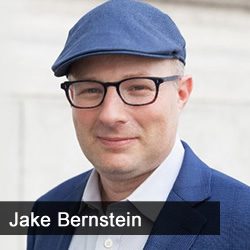
Jason Hartman starts the show in Puerto Rico, discussing tax havens. While tax is generally low in Puerto Rico, this doesn’t apply to real estate taxes. In the interview segment of the show, Jason welcomes Jake Bernstein, author of Secrecy World: Inside the Panama Papers Investigation of Illicit Money Networks and the Global Elite. They have a discussion centering around the Panama Papers. The Panama Papers contain a vast amount of info on governmental agencies spy, the Rothschild family, money laundering, and a stack of scandals.
Announcer 0:02
Welcome to the creating wealth show with Jason Hartman. You’re about to learn a new slant on investing some exciting techniques and fresh new approaches to the world’s most historically proven asset class that will enable you to create more wealth and freedom than you ever thought possible. Jason is a genuine self made multi millionaire who’s actually been there and done it. He’s a successful investor, lender, developer and entrepreneur who’s owned properties in 11 states had hundreds of tenants and been involved in thousands of real estate transactions. This program will help you follow in Jason’s footsteps on the road to your financial independence day. You really can do it. And now here’s your host, Jason Hartman with the complete solution for real estate investors.
Jason Hartman 0:53
Welcome to Episode 988 988. This is your host Jason Hartman. And I am driving In Puerto Rico, I’m driving to the other side of the island on my way to the airport to head over to Fort Lauderdale. And thought I would share with you some of my observations. And the theme of our show today will be a, it will have that sort of Caribbean Central American, South American vibe, I guess. Because we will be talking about the Panama Papers. You heard about this story. It was all over the media A while back. And it’s just fascinating, all of these companies and well people really, I mean, people companies, what’s the difference? Right? You just set up an entity and suddenly you’re a company. Maybe you’re a big one, maybe you’re a small one. Maybe you’re a solo company. But the Panama Papers is quite a fascinating story. And you’re going to hear a bit of an exposition about that today. And I think you’ll find that very intriguing when our guest comes on. So I’ve been in Puerto Rico the past few days. I’ve been staying with some friends and family Still more a lot of American Well, I don’t want to say American because Puerto Ricans are Americans, basically. But a lot of people from the States, the 50 states, not the potentially 51st state have moved down here, of course for these amazing tax benefits. You’ve heard me talk about it before, especially on my other podcasts that jetsetter show, you know, I have 20 some odd podcasts that I run with over 4000 episodes. So if you want to hear more from Jason Hartman, you’ll have no problem doing that because, well, he likes to talk. We’ve done some deep looks deep dives into the Puerto Rican tax benefits that are truly amazing. If you’re an American. It’s literally the best tax benefit opportunity in the world to very legally be incentivized to dramatically lower your tax rate. If you will move to Puerto Rico for well, depending on act 20 act 22 or five other acts that there are available to Americans like Peter Schiff, who’s been a guest on the show, and he famously moved to Puerto Rico. I saw his house yesterday. He has a 14,000 square foot house. Well, at least that’s what I was told cost him about 6 million bucks. And it’s in Toronto, which we spent the day in Toronto yesterday, which is a, personally a Ritz Carlton resort. It is phenomenal and massively, in my humble opinion, overpriced. Now, here’s the funny thing. You want to learn a little bit about real estate, what’s going on here? Puerto Rico is surprisingly, I mean, remember, they had a giant hurricane roll through here not too long ago. You can still see a lot of remnants from the hurricane. They are still in recovery mode. As you probably know, one entire island is without power. And about 10% of the population here I’m told is still without power. But I’m looking right now on the along the freeway of a giant freeway sign you Have those really big signs that hang over the freeway and you know, they’re just like us signs here. They’re green and white and, and you know those signs are down light poles down telephone poles down a lot of potholes in the road, you can probably hear them as I’m driving over them now. The roads are in very bad condition. So considering all of that the real estate at least the real estate that would be interesting to someone with few bucks, who lives in the states and wants to move down here to take advantage of the tax benefits. The real estate here is not cheap. It is not cheap at all. In fact, it is very expensive. So I will share more of this in upcoming episodes. But just to give you an example, yesterday, we looked at these condo flats in the Ritz Carlton resort now I get it, I know it’s Ritz Carlton but you know, my friends I stayed with my friends here and you know, they paid a million dollars for their house. It does have a boat slip you know very nice property. But it’s not like the real estate is cheap here. So don’t get that in your mind because there is so much money from the States flowing down here to take advantage of these tax benefits that the price of real estate is is actually quite expensive surprisingly, I mean, it’s a lot less expensive in the markets that we recommend the linear markets around the US. It’s certainly a lot less expensive in Las Vegas, in many areas around the country. condo flats, Ritz Carlton resort 3200 square feet. association fees. Have you ready? five grand a month. Yeah, I’m not kidding. five grand a month Hoa. Yeah. You heard me right. That is not a inaccurate statement. $4.8 million for a 3200 square foot condo flat. Yeah. Now granted, it is on the beach. But I mean, you could do that in a lot of American cities. less money. But you know, if you’re a hedge fund manager, like a lot of these people are, and you want to save on taxes, you know, do the math, it actually does pencil out. So there you go. Amazing. Okay, before we get to our guest talking about the Panama Papers with our sort of Latin Caribbean theme of the show today, I think you’ll find this very interesting hearing about how the global elite, hide their money offshore and do entity structuring to avoid or worse yet evade taxes and take advantage of asset protection strategies. I think you’ll be fascinated by this. But join us on May 19 in Philadelphia, bring the family enjoy some of America’s fantastic history in Philadelphia. If you want to bug out and go over to Washington DC, it’s not far away or in New York City. Everything is so close. This is our first public seminar in the northeastern United States. We will have to have our local market specialists there They will be talking about properties bringing their teams, you can hear about their management, the properties they have available, and meet them shake their hand in Philadelphia on May 19. And go to Jason hartman.com. Click on the events section. For more on that, again, the only creating wealth event this entire year in Philadelphia. And then the following weekend, if you want to stick around and enjoy the Northeast, maybe you’re from there. So this is not new. But if you’re not, it’s a good opportunity to go there. Take a tax deductible vacation, at least in part now, I’m not a tax advisor. There’s my disclaimer. But we will have the venture Alliance mastermind the following weekend, Memorial Day weekend in New York City in the Big Apple, our first event there as well. So a great time to take advantage of one or both of these events. Go to Jason Hartman calm for more information and click on events and Without further ado, let’s get to our guest today and learn about the interesting underworld of offshore entities and asset protection and all this crazy stuff they do as we learn about the Panama Papers. So here we go. It’s my pleasure to welcome Jake Bernstein to the show. He’s the author of secrecy world inside the Panama Papers investigation of illicit money networks and the global elite. This is going to be a fascinating topic today. So let’s dive in and take a deep dive. Jake, welcome. How are you? I’m good. Thank you so much for having me, Jason. It’s good to have you. So first off, tell us where you’re located. Give our listeners a little sense of geography. Sure. I’m based in New York, but the wonders of the internet I can collaborate with investigative journalists all over the world and explore data that was minted in the British Virgin Islands or Panama or Switzerland or wherever. It’s wonderful, but I have physical residences before. Okay, fantastic. So Jake, look at you know, almost everybody listening has probably heard of the Panama Papers. This is a big scandal, where a lot of the elite were exposed for keeping offshore entities and offshore accounts. And was it just about tax evasion? Or avoidance, the more politically correct or maybe? Or what just remind us what’s the Panama Papers thing all about? Just give us the broad strokes here and then we’ll dive in?
Jake Bernstein 9:40
Sure, absolutely. So this was a leak from a Panamanian law firm called most excellent. The data covered decades, really, the firm was founded in the mid 80s. But the partners had been doing it. I’ve been creating anonymous shell companies before then, for years, it was more than 11.5 million million documents covered. Almost every country in the world touched on world leaders including the Prime Minister, Iceland and the president of Pakistan, Minister of industry from Spain, including, you know, Saudi Royals and wealthy people all over the world. There was plenty of perfectly legal activity found in the files. But there was also quite a bit of tax evasion and money laundering and criminal activity, including narco traffickers and money launderers of every type. Ponzi schemers. There’s so funny after Bernie Madoff in the United States, every big Ponzi scheme around the world became the filling the country name Madoff, right. So right, oddly enough, in the Panama Papers, there’s a number of them the Argentinian made off is found in the Panama Papers. And there’s another minute I said, there’s there all kinds of scammers involved in one sort of confidential email that we found In the papers, a lawyer sort of candidly admitted that 95% of their business was helping people avoid taxes. So that was sort of the majority of it. And again, some of that is perfectly legal, and some of it is illegal. And some of it is for most of that probably is in that gray area where you’re not sure which is which. Right, right. Well, you
Jason Hartman 11:22
know, one of the chapter titles in your book is called Nazis and radical priest. So, you know, you mentioned some other shady characters, but even you know, even the Nazis and the Catholic Church, I guess, is involved too, right?
Jake Bernstein 11:36
Well, no, the chapter is really about the founding of the firm. And these two guys Jurgen Masek and Ramon Fonseca, Jurgen Masek, his father was a Nazi officer, a member of the SS. I think that sort of helped shape who Jurgen is, and Ramon Fonseca was at one point very plugged into, you know, he was going to become a priest. But these guys sort of came up with is kind of a brilliant idea that they wanted to create sort of the McDonald’s of the offshore world, right? their business model was high volume, low cost
Jason Hartman 12:10
now was this back in 1945, you’re talking about or back to the
Jake Bernstein 12:14
back in 1980, okay, to the mid 80s to propitious time, right, because the internet and digital capacity is growing. So you can really do this kind of whole large scale business. But the other thing is, is that you’re beginning to see real wealth growth in the developing world. So there’s new new wealth being minted, and a lot of these people don’t want to pay taxes, they don’t trust their governments and they want to get their money offshore. Muslim sector starts, you know, growing incredibly, they’re kind of the ones who put the British Virgin Islands on the map, and really make it a destination for offshore companies. To the extent that in China, people call an offshore company a BVI right. They did. Yeah, they just call it a BVI. And that really was my second second kind of putting the BVI on the map, and then lots of other offshore firms followed. But they ended up becoming one of the top four, five of these kind of company incorporators in the world, Got
Jason Hartman 13:20
it. Got it. So these are the big players in the offshore world. Let me just ask you another very broad question. And why does this matter to anybody listening? Is this just interesting? Or does it matter? Because as taxpayers and mostly, you know, honest, taxpaying citizens hard working people, you know, because we’re paying our fair share, and they’re not, or is it just sort of an interesting scandal, if you will? I mean, you know, the Madoff scandal, for example, didn’t directly affect everybody or I mean, it sort of did because the government had to investigate and prosecute and that caused a lot of money to the taxpayers, but Why is
Jake Bernstein 14:00
it matter? I mean, it’s an excellent question. So it matters for lots of different reasons. And this was really one of the reasons why I wrote the book secrecy world was, you know, most people, I think, think about this as something that happens someplace else, right, some sunny island with palm trees, or, you know, some musty Swiss bank in Geneva. But the reality is, this impacts all of our lives all the time. So for example, if you live in New York, or Miami, or Los Angeles or San Antonio, property prices are skyrocketing, and part of the reason is that there are a huge number of foreigners with anonymous shell companies who are coming in and buying property as investment properties, right. And this is a problem because we don’t know where the money is coming from. Now Fannie fan, which is the Financial Crimes enforcement network, has said that something like 30% of all cash transactions overlap with suspicious activity reports. So the fear is that a lot of this economic activity buying property is coming through either criminal money laundering or corrupt officials from other countries or what, what have you. But the real impact is that ordinary Americans, middle class Americans who want to buy an apartment in Miami or New York or Los Angeles, they can’t afford to do so. Right. In other words,
Jason Hartman 15:23
they’re paying more because these investors are getting an unfair advantage, the playing field isn’t level. So in other words, they have more money to throw around, and they buy up these properties in these various markets, you know, anywhere in the country or anywhere in the world, but especially the US because you know, we have such good rule of law here right at some, some will disagree, but the question is compared to what that’s always the question compared to what okay in the US is very good compared to everything else, mostly. And so they are able to pay more because they have an unfair advantage, right? Because they shelters that I use and they crowd out other. They crowd them out. They crowd out the marketplace. Yeah, good point.
Jake Bernstein 16:04
Okay. And then the other issue is, of course, now it seems like the government does not have enough money for infrastructure, for health care for police, for all kinds of things that citizens in the United States need, but the money just doesn’t seem to be there. And part of that is tax avoidance, the very wealthy and corporations sending their money offshore, so they don’t have to pay taxes. I mean, I want to estimate in the United States loses 70 billion a year in tax revenue from shifting corporate profits, tax havens. And let me
Jason Hartman 16:36
tell you, and let me tell you, folks, two of the big disgusting offenders, are these left wing liberal companies like Google and Apple, okay, and there’s a great documentary on it. Yeah. Oh, Nike, all the rest. They’re all frickin hypocrite left wing, hypocrites. You know, it’s just disgusting. But you know, there’s a good documentary I watched about it. It was on Netflix. It They talk about a scheme called the double Irish twist where they got the, you know, the different offshore corporation that licenses the intellectual property to the other one and the other one over pays for it so they can suck money out of the tax jurisdiction. I mean, you know, it’s just frickin disgusting. Now. I’m hopeful, I must say, and I’d love your comment on this. It’s the very, very new law of the land. But under the GOP tax bill, I’m hopeful some of that money will repatriate to us shores, because it’s not as punitive to bring it back now. Right? What are your thoughts? This is all new. So nobody really knows the effect yet.
Jake Bernstein 17:36
But I have to burst your bubble. Okay. All right, disagree. Let’s think about it from the company’s perspective. If you’re paying as little as 8% or even zero percent, offshoring your money, why would you bring it back to the United States to pay
Jason Hartman 17:50
21%? Fair enough? I agree with you. But all I’m saying is that
Jake Bernstein 17:54
there are certain reasons why you might want to do that right. If you wanted to pay down debt
Jake Bernstein 18:00
If you want to show this,
Jake Bernstein 18:02
then it might make sense to bring the money back at the lower tax rate. But if the savings is so huge by keeping it offshore, it just doesn’t make I don’t think that as much money is going to be repatriated, as has been promised, it’s only a question of reducing the Delta.
Jason Hartman 18:19
Okay, we got to reduce the Delta. And so with the new tax plan, it has reduced the Delta, right? I’m not saying it’s perfect by any means. It’s not a lot of stuff I wanted. But, you know, it’s easier to deal with that money in the US for these companies. It’s a public relations problem for them. And again, there’s a lot of stuff they can’t do. I mean, this, you know, in the US just a great country to do business. And there’s so much less friction here than there are in a lot of these other places. But anyway,
Jake Bernstein 18:50
yeah, go ahead. We’ll see. We’ll see. I’ll see. It’ll be interesting. What my book secrecy world really shows is that both for multinational corporations, and also for a certain top strata of global wealth wealthy individuals, they sort of don’t view things in terms of the nation state anymore, right? You know, these are people who they have houses in London and they have a house in New York. And they have, you know, they fly around on private jets, and they have bank accounts in Singapore. And they have anonymous companies that have been minted in Dubai, or wherever they may make their money in the United States, but they don’t feel the same attachment to the US, as perhaps existed 20 or 30 years ago. Hey, listen, it’s like in sports with free agency. It’s kind of the same concept. You know, they move from shore to shore, there is no home team concept. There is no loyalty unfortunately, it’s terrible. I hate it. Okay. But it is the world in which we live now. They would probably say and try to spin that positively saying, well, we are citizens of the world,
Jason Hartman 19:57
you know, or something like that. But yeah, you’re right. No question. No question.
Jake Bernstein 20:01
And that’s all fine and good, right, except, and this has already happened in Europe. And I suspect it will be happening here too, as austerity takes a deeper bite, you know, as the citizens who actually pay their taxes, live here, work here, you know, play by the rules as they exist, start to see that there are ramifications. For others not doing that. I think that they’ll start changing the rules, and then they’ll start demanding that there be more buy in by companies, and by individuals in the places where they make their money. The incentives are always, you know, the carrot or the stick. And, you know, you got to incentivize with a little bit of both. That’s the way life works. Right. So, hey, you know, I want to I want to make sure, Jake, that you tell us about some of the scandals like what are some of those shocking revelations from the Panama Papers, give us some like, you know, maybe a couple specific examples of it. I think the listeners will like to hear that One of the biggest findings that we had, and I have an entire chapter on this in secrecy world was about Vladimir Putin. You know, there has been lots of speculation through the years that Vladimir Putin is, in fact, a multi billionaire. Yeah, maybe one of the richest people in the world. Now, his official salary is minimal. I mean, I think he makes less than the President of the United States makes. But there’s long been an assumption that he has a piece of lots of businesses in Russia and elsewhere. What we saw for the first time in the Panama Papers, was a network of companies around Vladimir Putin, that were being operated by wealthy oligarchs who were very close to him, and including one person who nobody before the Panama Papers had ever considered to be even a businessman. This is a man named Sergei will do again, who is a classical teller. He also happens to be Vladimir Putin’s one of the better Putin’s oldest friends and the gods. Vladimir Putin’s eldest daughter, you know, this is a guy who has said that he’s not involved in business. He has no financial activity whatsoever. But through the Panama Papers, we got to see that, in fact, he was the ostensible owner of several companies that were set up by a Russian bank that the US Treasury Department has that is closely tied to Vladimir Putin. And that was doing incredibly sophisticated financial deals, and connected the companies through which billions of dollars was flowing, including hundreds and hundreds of millions of dollars for Russian state banks. So all of this secret economic activity that’s sort of floating around very close to him. And it’s really the closest we’ve ever come to actually seeing the true economic activity involved with Putin and the cronies that he’s surrounded himself.
Jason Hartman 22:53
Now, is this law firm. Are they still in business after this scandal, or did they dissolve
Jake Bernstein 22:59
it? An excellent question, the leak all but destroyed the law firm. They had about 600 employees at their height, and they’re now down to about 80. The reality is, is that they released more than 240,000 companies into the world. And there are still plenty of governments and jurisdictions that are demanding information about those companies. So the firm can’t really unwind while this company still exists, right, you know, but most of their business, most of their activity right now is doing the vetting and doing the due diligence work that they were supposed to do at the beginning, in many cases, but now they have to do because there are there’s all this attention on their Right, right, but they’re not doing a lot of new business. But there are lots of other players in the space. So one of the things that most second Fonseca the two principals of the law firms have complained about bitterly is that the true winner of their demise in some ways, is the United states, most people don’t think of the United States as a tax haven. But in fact, it really is. I mean, Delaware gets more than $1 billion a year from its Business Registry. And that’s just pumping out. These anonymous shell companies that are used by oftentimes used by foreigners who are using them for money laundering or other criminal activity in the US State Department has complained bitterly about the fact that Russian mafia and transnational gangs are using Delaware companies. And Delaware’s not the only one, Wyoming and Nevada are also big players. So the real movers and shakers of this system are really the United States In the United Kingdom. They’re the ones who set the rules and they’re the ones who decide how far goes
Jason Hartman 24:47
yeah, and then the United Kingdom has a jurisdiction like that they have jersey you know, and there’s a Cook Islands part of the United Kingdom. I can’t remember I think they might be you know, but but there’s all these hearts all over the world. Yeah.
Jake Bernstein 25:00
Yeah, it’s really interesting. Tell us about, you know, you talk in your book about the CIA, and their involvement and you know, their secret bank accounts too. And then also about the IRS and why they’ve been largely ineffectual. It’s stopping this. So what’s going on there with CIA and IRS involvement? You know, the CIA and KGB were early adopters of the secret world. And I found in the CIA’s archives, I found this extraordinary series of memos from early in the CIA’s history. This was in the 1950s. And they were faced with a very practical problem, which is we have all of these covert agents, how do we secretly pay them? You know, it’s gotten to the point where we can’t actually be walking around with suitcases full of cash. There’s there’s too many of them. Because work we need bank accounts we need like an infrastructure. So you know, being the bureaucracies that it was. There were lots of meetings and memos where they detail how they’re We’re going to create fictitious people and companies who will open up these bank accounts in certain banks, and the whole process through which it works. And then by the time you get into the 1980s, you know, the CIA is actively sort of covering for money laundering activities. And the US ambassador of the Seychelles finds this out when he and his staff start digging into the Seychelles and how it’s being used by the Gambino family and other people for money laundering. And they get a message from the director of the CIA saying, stay away from this. We don’t want you to mess around with the facial. Oh, it’s to the IRS. I mean, the IRS has been decimated in recent years. Its budget has been slashed. enforcement has been crippled. So in fairness to the IRS, their job has been made much more difficult. But it’s also you know, they don’t get a lot of cooperation from the tax havens. They’re afraid to go after lawyers because they don’t like To lose and they’re worried about attorney client privilege, even though I think it’s established that, you know, a lot of this activity is not necessary. You don’t have to be a lawyer. So it’s not covered by attorney client privilege. But there’s sort of a lot of bureaucratic Malays to some degree about really going after offshore tax evasion. And I have a chapter in my book secrecy world about an IRS agent named Joe West who actually did go after tax evasion. He had done a very successful audit and managed to track down someone who was hiding billions offshore. And it was so successful that his immediate bosses said, Why don’t you do a research project, really study how the system works, and figure out how to go after the tax evaders. And he did. He went all over the world. He talked to people, you know, offshore banks, and he talked to people in prison. He talked to the NSA, he talked to, you know, the organization of Economic Cooperation and Development. He talked to lots of different people and he came up with whole menu to the IRS of how they could go after different forms of tax evasion using the offshore system. The IRS only agreed to do one of his proposals, at least as far as I know, and are up to now. And this one involves offshore credit card, and it was actually quite successful. But the whole project the whole process was so painful for Joe West, I think the bureaucracy that he had to constantly fight against in the inside the IRS to make this happen, that he ended up retiring early, kind of burnt out, you know, by the whole thing. So it’s very difficult to go institutionally. And then because of the outside pressures for the IRS to really combat this.
Jason Hartman 28:40
This is why the elite just get away with everything because during the Great Recession, we had the too big to fail companies that became corporate socialists, basically, you know, and they were bailed out the little companies were left to die. The big companies were probably the most dishonest, disgusting players of all but you know, here they are. They’re still with us, most of them with like, two exceptions. And they got bailed out. You know, it’s like, what gets rewarded? It’s so unfair, isn’t it? Because, like you said, the IRS doesn’t like to lose. And they know if they go up against these elites, they will have a real fight on their hands. But if they audit, Joe sixpack, they can win because they can overpower him. They’re more sophisticated, they got more resources, and they’re gonna win and it’s gonna look better for the auditor’s record. I mean, I heard stories of, you know, people, you know, it’s like, I have four kids, and I hardly make any money. Why am I getting on it? You know, versus here, we got this, you know, billionaire and they don’t want it him. You know?
Jake Bernstein 29:46
That’s the way it works. Right? You’re absolutely right. You know, the auditors of the IRS. You know, they have to complete their audits in a certain time period. They have to do a certain number of audits. So, you know, it’s very difficult for them, but I think with the IRS and the Justice Department, Often fails to recognize is that if you go after a few billionaires, you know, and you prove that there is improper activity going on, that’s going to send a message to everyone else. And you get more compliance down the line, because you’ve made an example of someone. Yeah. But there’s not enough of that going on for sure,
Jason Hartman 30:19
we would be remiss. And I know we’ve got a wrap up. But this is really interesting. Jake, would be remiss if I didn’t ask you about one family that, you know, many of the conspiracy theorists talk about a lot. And, you know, I think you know, what I’m gonna say here in a moment. But hey, you know, they talk about central banking and all of this stuff, and this might even be too high level, you know, this is above the the Putin the Vladimir Putin genre. It’s the Rothschild family, you know, I mean, did anything come out in the Panama Papers about the Rothschilds are they are they just so far out of reach that nobody knows?
Jake Bernstein 30:59
The Rothschild bank is definitely in the Panama Papers. And in fact, I think they have opened up some some activities in Nevada, which happened after the Panama Papers came out. So yeah, I mean, there’s a lot of old European families in the Panama Papers and subsequently the paradise papers, which involves a law firm in the Bahamas called Appleby. Yeah. So yeah, I mean, basically, you know, if you are a big player, then you are found in these leaks just because there’s they’re so big and these people use us this world so so yeah, they’re they’re
Jason Hartman 31:37
just the Panama Papers, move things in the right direction, to where you know, this, this exposure and light is the best disinfectant, right? Are things moving in the right direction? Or is this just gonna continue forever? And, you know, we’re all all of
Jake Bernstein 31:52
us. Little People are losing out. That’s a fascinating question. You know, because this really is sort of the you have to think of it as a living organism. And adapts, and it moves around to continue its activities, right? So there has been improvement, you know, the British Virgin Islands or jersey or other places have cracked down a little bit, and probably will do more so in the future, but that also means that there’s more activity in Dubai, and in Singapore, and in other places like that. So it’s something that’s going to require constant vigilance. It’s oftentimes a couple of steps forward and a step back. But I think it’s really it’s gonna require an active citizenry, you know, people who are demanding that, yes, you know, everybody has to play by the same rule. Yeah, you know, and that is his question of fairness. And so I think the more that happens, the more it’ll continue to move in the right direction. And the more people demand transparency in this kind of activity, the better off we all will be because we’ll be able to see what’s going on good stuff.
Jason Hartman 32:55
Well, Jake, thank you so much for joining us. Please give out your website. Of course, people Get the book and all the usual places. give out your website and and a closing thought for us.
Jake Bernstein 33:04
Absolutely. So the book is secrecy world inside the Panama Papers investigation of illicit money networks and the global elite. It is available everywhere. And my website is Jake Bernstein dotnet. And EP, not c om J. Bernstein dotnet. And I blog on there and put out my thoughts can also reveal some new things. So yes, thank you so much for having me, Jason. I really appreciate it.
Jason Hartman 33:28
Jake. It was great to have you keep up the good work and keep exposing this. Oh, there’s one more thing I forgot to ask you. You talked about a great website. And I’m there now. It’s the International Consortium of Investigative Journalists, great website with some great resources. Just tell us about that real quick, and then we’ll let you go.
Jake Bernstein 33:47
Absolutely. So this is the group that I was working with. This is the group that really managed this whole global investigation that produced the first stories on the Panama Papers and also did the paradise first is it cia.org now what’s particularly interesting about ici j is that they have created now the largest public database of offshore holdings. And this is not just the Panama Papers in the paradise papers, but also offshore leaks and other investigations they’ve done. It’s got company names, directors, shareholders, and it’s all completely searchable. So you could put in, for example, your zip code into the database, and it would pop out all of the offshore companies that are connected to people in that zip code. So it’s an amazing asset. And it’s great fun actually, to sort of look in and see what other people are doing. I highly recommend that listeners, check it out at ici j.org, put in your zip code or any zip code you like and find some interesting stuff.
Jason Hartman 34:50
Great stuff. Jake Bernstein, thank you so much for joining us today. Thank you.
Thank you so much for listening. Please be sure to subscribe so that you don’t miss any episodes, be sure to check out the show. specific website and our general website heart and Mediacom for appropriate disclaimers and Terms of Service. Remember that guest opinions are their own. And if you require specific legal or tax advice, or advice and any other specialized area, please consult an appropriate professional. And we also very much appreciate you reviewing the show. Please go to iTunes or Stitcher Radio or whatever platform you’re using and write a review for the show we would very much appreciate that. And be sure to make it official and subscribe so you do not miss any episodes. We look forward to seeing you on the next episode.