
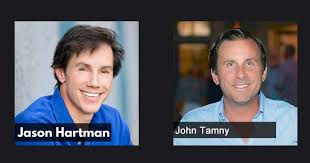
On this Flash Back Friday Jason Hartman kicks off the show with listener Nate and his mom discussing what was learned during the recent Creating Wealth seminar, as well as getting some tips about how to create long-term tenants who are understanding of rent increases.
Later on the show, Jason brings on guest John Tamny, director for the Center for Economic Freedom, Editor of Real Clear Markets, and author of Who Needs the Fed?: What Taylor Swift, Uber, and Robots Tell Us About Money. They talk about why he the Fed and their power and policies.

Announcer 0:00
Welcome to this week’s edition of flashback Friday, your opportunity to get some good review by listening to episodes
Announcer 0:05
from the past that Jason is hand picked to help you today in the present,
Announcer 0:10
and propel you into the future. Enjoy.
Announcer 0:15
Welcome to the creating wealth show with Jason Hartman. You’re about to learn a new slant on investing some exciting techniques and fresh new approaches to the world’s most historically proven asset class that will enable you to create more wealth and freedom than you ever thought possible. Jason is a genuine self made multi millionaire who’s actually been there and done it. He’s a successful investor, lender, developer and entrepreneur who’s owned properties in 11 states had hundreds of tenants and been involved in thousands of real estate transactions. This program will help you follow in Jason’s footsteps on the road to your financial independence day. You really can do it. And now here’s your host Jason Hartman with the complete solution for real estate investors.
Jason Hartman 1:06
Welcome to the creating wealth show, Episode 1003 1003. Boy, those are high numbers. Thank you for listening all this time. This is your host Jason Hartman and I’m coming to you today from Philadelphia. We just held our creating wealth seminar the only one we plan to do this your yesterday here in Philadelphia. Thanks to all of you who came out for that that was a fantastic event. And we got such positive feedback on it. So thank you so much for joining us. It’s always great to do that every one of those events is different, even though they have the same basic structure and outline. You know me I’m the king of the tangents, right. So I always go on a tangent or a rant about something. So anyway, I’m glad you enjoy those. And I surveyed since we just passed the 1,000th episode I surveyed the audience and about 25% of the audience said they listened to a Over 500 episodes, so Wow, this show must be interesting to at least some of you to listen to that many episodes. Thank you for doing that but one person in the room and I know there are others out there and some of you listening and and please by the way if you are one of those people that I’m about to mention, contact me and let me know what you think at Jason Hartman comm slash ask Jason Hartman com slash ask because I’d love to have you raise your hands mention you on the show and know who you are and know your feedback. If you have listened to all 1002 to this time episodes 1000 episodes and Mike in the audience here in Philadelphia yesterday, listen to all 1000 episodes. So Mike, thank you for listening for so long, and we really appreciate it. We had a father daughter, the daughter was here at the event and and she listens to a lot of the episodes and her dad listens to all of them. They brainstorm about them together. So I thank you all so much for being such loyal listeners, and for also telling your friends, your associates and even your enemies about the show. Because they need to know to, you know, the old saying, I think it was a blink and keep your friends close and your enemies closer, right? Today we saw the Barnes collection, which is this amazing collection, a private collection of impressionist art here at the Barnes foundation in Philadelphia. And there’s a big controversy surrounding this incredible multi multi billion dollar that’s billion with a B, dollar private collection of impressionist art really an incredible thing. If you want to know more about that, watch the Netflix documentary entitled The Art of the spiel. Well, it’s not a Netflix documentary, necessarily, but it’s on Netflix. Maybe it isn’t Netflix, whatever. Anyway, the art of the steel is the name of it. I saw that and I thought I’ve got to come and see this collection of impressionist art. It’s incredible. Incredible. So we just finished that and we’re going to relax for a while go to dinner. But I’ve got a couple of our attendees here from yesterday that wanted to share a few comments. And today by the way, we have a fantastic guest. Remember I told you last week I had a really good interview? Well, this is it. You’re going to hear it today, where we are going to talk about a really unique new idea as to how to solve recessions in cycles in the economy. This guest today, who wrote a book about the Fed and several other books as well about robotics and automation, we’re going to dig in some some really good stuff with our guest today. So you’re going to like this interview a lot. I really enjoyed this guest. So he’ll be coming up in a few minutes. But some of our attendees from yesterday are here. One of them is Nate, and the other is my mom who’s been on the show before and shared some of her thoughts yesterday at the creating wealth seminar about self management and about preventing to tenant turnover, keeping your tenants for a long time because you know that the tenant turnover is an expensive thing. You want to keep your tenants for a long time. But don’t keep them for too long. Because if you keep them for too long, that might be a sign that your rent is too low. So remember the old adage that I’ve talked about, you know, you gotta raise the price until the demand falls off. In other words, still, you have some degree of vacancy, a palatable degree, but not too much. So that’s always a balancing act there. But first, one of our new attendees who hadn’t attended any of our events before, is Nate. And he’s here and he just wanted to share a few thoughts about the event. What do you think, Nate? Jason, thanks so much for having me. I thought the event was amazing. I thought that I knew a lot about real estate but coming to your summer I realized there’s a lot of things that I don’t know. And one thing that you did besides teach me a lot about real estate is you inspired me to look beyond where I live and to, you know, kind of shrink down the world and and make it smaller so that I can invest some places that are further away and get better returns. So I really appreciate that. And I’m excited to be here this weekend. And, again, for me, and from all the people I heard there, thanks for doing these events, because they’re great. Yeah, thank you so much, Nate. I really appreciate it. And I’m glad you attended. And then you will be with us next weekend as well in New York City for the venture Alliance event, you got the big public seminar, and then you’ll be at the smaller mastermind group next weekend. Any thoughts about this coming weekend in New York City, what comes to mind is the the amazing people that are going to be at that event. So I’m excited to just be around and listen and again, learn from people who are high level achievers and the areas of life that they’re working in. So basically, I’m really excited for the people that I’m going to meet there. Good stuff. Well, thanks a lot for joining us, and thanks for sharing some of your thoughts about the event. And we had a couple people there yesterday that shared some thoughts about the event with our video. okorafor bandhu came out and videotape he came down from Baltimore. He actually works for one of the Agoura financial companies. So you’ve heard many of the Agoura financial guests on the show over the years, including my very favorite financial writer even though I disagree with him about the solution. Most of these guys I don’t agree with their solution, but I love their analysis on things. You know, they’re all generally kind of gold bugs and stuff like that. And I’m definitely not a gold bug and I’m not a cryptocurrency bug either. But they do have some interesting thoughts and I love bill Bonners writing. He, of course, is one of the Gora or the Agoura financial founder and he’s been on the show before. So we’ll get him back. He’s just has a great way of writing about stuff and I just love I love his style. So that’s good. Yeah, so we’ll share those later on a future episode some of those comments and maybe some tape well not tape but you know digital audio files from the event yesterday on the show in the future just so you can get a sense Pulling of that. Also my mom was there. She doesn’t come to many events, but she’s been to several over the years, you know, but not many lately. And Mom, welcome back on the show you’ve been on a few times before. So what did you think about yesterday?
John Tamny8:12
Oh, I enjoyed the seminar very much. I had never attended your actual creating wealth seminar. Oh, you haven’t been well, no, that was brand new for me. And I also enjoyed the providers from the other local market specialist from Dayton, Ohio, and from Florida. So it was very interesting. And it was great to meet all of the attendees from Philadelphia.
Jason Hartman 8:36
Rather, lot of people from Philadelphia, we had quite a few people from like New Hampshire and, and then Minnesota, obviously was representing pretty heavily at this event too, which was kinda interesting people from all over but, you know, this was our first event in the northeastern United States. Well, I take that back. We did a venture Alliance mastermind event A few years back in Newport, Rhode Island, and saw the Newport Rhode Island mansions and stuff. But this was our first sort of public seminar up here. So it was kind of fun to do it. And you know, Philadelphia, I haven’t been to Philadelphia in a long, long time. So it’s good to be back here and the sun is out now. It was raining yesterday and the day before a little bit, but it’s beautiful weather now. So we’re going to go to dinner at a beautiful rooftop restaurant. That ought to be fun, but dumb. Do you want to share any thoughts though about tenant turnover and keeping your tenants just some practical advice for our listeners just really quickly about that. I know you shared some great stuff yesterday in the seminar, just about self management. You know, I give you a hard time about being the extreme do it yourselfer, but I tell you folks, I am more and more as you listeners know, recommending self management of your properties, because it’s so easy to do nowadays with some of the technologies and tools available to you and and you can do it from a long distance which is a great, great thing. But I don’t know I’m kind of putting you on the spot. But do you have any quick thoughts about that you want sure
John Tamny9:59
you have heard About this tenant toodaloo
Jason Hartman 10:01
Yeah, long term can. We gotta explain that that lessers So, my mom was on the show before. And we did this. We did this episode where she shared her longest staying tenant who’s been on a property of hers a rental property since 1989. Now, just note how long ago that was, that was right around the time the Soviet Union collapsed. Okay, so, and the Cold War ended. So, you know, that’s a long time ago, folks. Anyway, this tenant is a truck driver. But you know, I asked you, I mean, that’s a long running tenant, my longest tenant ever stayed nine years. And interestingly, that was a property I self managed. I kept the tenant a long time. So for some reason, you know, it seems that some of these property manager properties have more turnover. Now, I don’t know if there’s a specific reason or conspiracy behind, but I just know that it’s happening. So some of your tips mom Long Term tenant retention, but you also raise the rent every year. Right? talk about that a little bit.
John Tamny11:06
Yes, it’s just simply much more profitable to keep a tenant in your property for a long period of time. Number one, they begin to treat it like their own home. And instead of bothering you for a little fix it items and you’re having to pay for them or hire someone to do them. The tenant ends up doing most of that himself. I just can’t recommend that you keep tenants for a long term
Jason Hartman 11:33
for you can recommend that you may need one.
John Tamny11:37
Yes, I recommend it highly, that you tried very hard to keep those tenants on a long term basis, but you must not forget to raise their rent each year, even though it is only a token amount of $25 this is part of your training that 10 to expect that there will be yearly increases.
Jason Hartman 11:58
Okay, good. So you ready? rents that’s your policy, you always raise rents every year is that pretty much the deal, and you raise it about 25 bucks. Now there’s I’ve talked about that philosophy many times. Okay, calm down. She’s motioning me, folks. I know you can’t see that. But she’s,
John Tamny12:14
I want to talk, hang
Jason Hartman 12:15
on. Okay. One of the philosophies I’ve shared with you over the years listeners is that you raise the rent, you know, and it depends on the price of the property, the amount of rent you’re charging, of course, the base rent is relative to the rent increase, obviously. But you know, if it’s $1,000 property, or a 1500 dollar a month property, and you raise the rent, 25 or $50, whatever it is, even if it’s a token amount, it’s not worth moving for such a small amount of money, right? It’s just enough to increase your yield, but not enough to get the tenant to move away. Now rent increases. You talk about that on a kind of maybe a percentage basis if you can read them $1 amount, it’s more relevant.
John Tamny13:00
Okay, sometimes I will just figure the rent at 4%. And if the tenant is really right at the percent increase, a 4% increase, and if a tenant is at the maximum rent for that area, simply give a $25 increase, because that’s part of letting that tenant know that they will have yearly increases and not have a fit once you increase the rent.
Jason Hartman 13:27
So you’re kind of training them to expect that. Now, I’m curious, do you charge pet rent? I don’t know if I’ve ever had this conversation with your mom. But I am really recommending and hey, I love animals. I have a dog I huge fan of animals, right. But I think that all regular single family home independent landlords need to get in the habit of following what the institutional landlords and apartment complexes are doing and charging pet rent.
John Tamny13:54
People will pay
Jason Hartman 13:55
$25 or $30 a month per pet and you Magic, the way that increases your yield. I mean, think about it, folks, that’s $360 a year or if it’s 30 bucks a month, right? That’s a significant increase in your yield, that someone will barely notice.
John Tamny14:13
Yes, I charged pet rent. It was either 25 or $30. Right now, I don’t have anyone I know about that has pets. So that doesn’t apply. But I have charged it and they seemed accepting of it.
Jason Hartman 14:28
I remember I had a tenant once in one of my properties that I was self managing. And he had two dogs there didn’t tell me about either of them. But I caught them there because the neighbor told me Actually, and then I just that charged him for all the pet rent, and he was happy to pay that was like no problem. He was happy. I didn’t kick him out. I think so for violating covenant of beliefs. So yeah, and by the way, let me just address that for a minute because someone asked me about that question last week. The lease, you know, everyone knows that you can kick someone out of their property, you can evict them We’re not paying the rent, that’s sort of obvious. But there are other issues in the lease that you can kick them out for. And one of our clients thinks that, you know, the tenant may be doing other wrong things in the property. And those are covenants of the lease, you can also evict someone you can start eviction process for violating a covenant of police. So say for example, you know, they have an animal there and they didn’t disclose it to you. Say, for example, they’re doing something God forbid doing something illegal, you know, maybe they’re doing drugs in the property. Now, look, marijuana is legal in a lot of places. Now, the trend is going to be that it’s going to be nationally legal, probably. But, you know, other drugs, more serious drugs, obviously, right. say they’re having big parties, and they’re getting noise complaints all the time. You know, these are things that could fall under covenants of the lease, obviously, and you can also evict people for that or you can sanction them for that or negotiate with him for that. So you know, remember there’s more to it than just paying the rent. You have more power than you think. landlords. So keep that in mind. Another tip I wanted to share with you that my mom brought up recently, one of my properties in Texas that I purchased a long time ago, needs a new fence. I’ve owned this property for maybe 14 years, and the fence is looking pretty shabby. You know, it’s just a cheap wood fence. Right? My mom says, Jason, you know, the neighbors have to share the cost of the fence with you. The property manager didn’t bother to think of that. But mom did. And I thought I didn’t even think of that. Why didn’t I think of that, of course, they have to share the cost. And so now the property manager went and got one of the three neighbors that share the fence. You know, there’s three sides of the fence in the backyard that are shared with neighbors, they got one of the neighbors to share the cost with the fence, that neighbor would contribute $644 and I would pay $644 and that would replace one of the three sections of the fence. So I said Mom, okay, what do I do now my ultimate self manager, mother, who’s pretty good at getting deals. stuff, she says, Jason, what you do is you collect that $644 from the neighbor and your place only the one section of the fence. That’s a pretty good idea, because it’s going to make the other two neighbors jealous that there’s a nice new fence on that one section. And that’s going to motivate them to contribute. So we can replace the other two sections what I want to replace the fence as the landlord, I don’t mind spending the money. It’s not that big a deal. It’ll last a long time, we’ll probably put in a nice vinyl fence that will basically last forever and really upgrade the property. So it’s fine with me to do it. But again, the neighbors have to contribute half the cost for the section they share of the fence. You know, they’re getting half the benefit. Why should I pay for it all? So, Mom, thank you for that advice. I liked it. Either a welcome Jason. Okay. Hey, we got a really good guest. today. We’ll get through half of the interview. today. We’re going to talk about some really interesting stuff about the concept of recessions and cycles in the economy. This is a fast Amazing interview, I think you’ll really enjoy it. Also, if you want to join us we have a couple more people that have joined us for the venture Alliance next week in New York City or I should say this coming weekend. If you want to join, go to venture Alliance mastermind calm and check out the venture Alliance mastermind group, you can go to Jason hartman.com. And purchase a one time guest ticket for that. Or you can reach out to her anywhere through our website and contact an investment counselor and they’ll help you with that. So more to come on that and here is our guests.
Jason Hartman 18:39
It’s my pleasure to welcome john Tammany to the show. He is Director for the Center for Economic Freedom at freedom works. Senior economic advisor at Theodore research and trading and editor of real clear markets best selling author of popular economics, what the Rolling Stones Downton Abbey and LeBron James can teach you about economics. Also who needs the Fed? What Taylor Swift, Uber and robots tell us about money credit and why we should abolish America central bank, but his new book is entitled The end of work. Why robots won’t take your job and might get you one you love. We got a lot to talk about today. JOHN, welcome. How are you? I’m great. Jason. Thanks for having me on. Yeah, it’s good to have you I These are great topics. And let’s talk a little bit about I mean, what Taylor Swift, Uber and robots can tell us about money credit and why we should get rid of the Fed, I mean, make the connection for us?
John Tamny19:37
Well, it’s a surprisingly easy connection. Several years ago, my wife and her friends went to a Taylor Swift concert in Washington DC at National Stadium afterward, as you can imagine, there was a rush to the exits to get home. And so if you want to ride the metro from that stadium, it was going to take at least two hours to get on one. ABS were non existence. And so my wife and her friends tap the button and Uber showed up. Uber charged four times the going rate surge pricing, and my wife was home within a half hour. And so it was a reminder right there that even if you take the Fed seriously, its interest rates are wholly backwards. The Fed during periods of economic distress, pushes the rate that it targets down to zero. Why on earth would it do that? That’s the equivalent of Uber during mass demand for its drivers, setting the rate as low as possible. Well, if it did that there wouldn’t be drivers at net stadium to take my wife and her friend zone. The fact that they had surge pricing is what brought the drivers to the stadium. Sure the said in its infinite wisdom, does the exact opposite of what it should do. It tries to push the cost of credit down right at a time when you want it to rise to a Apple that brings in savers will be there for those who need credit.
Jason Hartman 21:04
Oh, interesting. Interesting. You know, I haven’t heard anyone express that before. And maybe you haven’t either. And that’s why you thought of it. It’s an interesting hypothesis. Because, you know, when we look at the supply and demand curve of anything in any market, and money is just another commodity credit is just another commodity like gold, silver, concert tickets for Taylor Swift, one of my favorites, whatever, right? So you’re right, it makes sense. But the way the Fed would seem to view it, john, is that they would say, well, we need to pump money into the economy. And since they don’t really play by normal rules, they play by Fiat. They can create money out of thin air and adjust the abundance of credit and money supply. money supply and credit supply are kind of the same thing, but not exactly by just lowering reserve ratio. or creating money electronically out of thin air. I mean, you know, we used to say printing but they don’t even print anymore. printing is now too much of a burden. Running a printing press. So
John Tamny22:12
it’s not really the same Is it because they don’t really play by the rules that Uber plays by they ultimately they do the Fed can’t change reality the Fed cannot increase credit they can certainly distorted
Jason Hartman 22:26
for a while.
John Tamny22:29
My take is that the feds ability to distort much of anything is overstated. Let’s never forget that when you borrow dollars, you’re not borrowing dollars. My argument in the book is that money and credit are totally different. You’re borrowing dollars for what they can be exchanged for your borrowing access to trucks, tractors, computers, desks, chairs, buildings most important of all labor. The Fed cannot increase what it is you’re seeking when you see credit. And so my tip Okay, assuming the Fed were to print trillions and trillions of dollars, it’s not going to change the on the ground reality. Just because the Fed prints dollars doesn’t mean that people are going to release their trucks and tractors to those who are in need of resources. And I would just add that the Fed can’t pump money in the economy in the first place. Let’s look at quantitative easing. The Fed tried to do that. And the reality is that 10s of billions of dollars, quote, exited the United States on a monthly basis. Let’s let’s look at a local level, let’s say the Fed dropped $10 billion into the center of Baltimore, that money would exit Baltimore as quickly as derives and it would be as there’s no economic growth taking place in Baltimore. Conversely, let’s say the Fed drained all the banks and Silicon Valley of the money if they raise the reserve requirements substantially, it would be utterly meaningless, simply because people around the world are lined up trying to have exposure to Silicon Valley. And so my take in the book is that we vastly overstated The feds important since dealing with antiquated banks that are no longer major players in the credit space. And so Sure, I’d love to see it end. But even if it doesn’t end, I think market forces are ending the Fed force. Well, listen, you’re not gonna get any argument from me in principle.
Jason Hartman 24:16
I agree with you. But I like what you’re saying. I do think however, you know, obviously, the ivory tower theory and practice are two different things. And I’m not saying you’re coming from the ivory tower, because I don’t think you are you joining this popular economics we’re talking about right. But, look, I mean, there’s there’s no doubt that the fed by managing interest rates, massively influences markets. I mean, look at what’s happened over the past several years coming out of the Great Recession, in the housing market, in the stock market. I mean, the money is just flowing. And you know, it’s finding places to go.
John Tamny24:57
I admit that there’s a you know, I like it. Hey,
Jason Hartman 25:00
john, let me give you a little more. Let me give you a little more to chew on. You argue with me all you want about it, no problem. But one more thing to chew on. I’d like it more like to pumping oneself up with caffeine, or going out and partying and having a hangover the next day. Of course, the crash is always present when you do that, but you definitely can stimulate for a little while. Right. Okay, go ahead.
John Tamny25:25
I really question. My question in the book if quantitative easing is what powers markets forward, what would let’s explain Japan because they’ve been conducting quantitative easing for 30 years now with with no corresponding market rally, I can explain that by the way if you want me to but go ahead and what what what why didn’t it work in Japan, but it worked in the you are?
Jason Hartman 25:51
Yeah, my theory about Japan is Japan has a wholly different problem number one, of course, it doesn’t work as well for anybody else because they don’t have the result. currency and the bully pulpit like the US does. But that aside, Japan has a demographic problem. Japan is very insular. You know, there’s really almost no immigration, okay? And they’re not having any kids and you can’t build an economy on that
John Tamny26:16
country that’s expanded economy. Would you agree that this demographic problem is exponentially better than the one after World War Two, when the country was literally destroyed? That was a major demographic economy boom. And I just I think that it’s so easy to make I think it’s more ivory tower to say that well, we’ve got the printing press here. Markets respond all this
Jason Hartman 26:45
bad press for
John Tamny26:46
investors are stupid. Like you’re well yeah, but see, the Fed kept interest rates low and so there’s a flight into yield. Oh, really? Funny how that didn’t happen in Japan. And let’s never forget that up. is still a major economic force, of course. Oh, but see the fed the Fed created 4 trillion and had to find itself somewhere? Well, it didn’t it borrowed 4 trillion from banks. But for a buyer excited by QE to enter the market by definition, a seller must exited. It’s not as though implicit in this QE narrative that the Fed uniquely among all central banks had this ability to pump up stock market. It ignores all the times the Fed couldn’t pump up the stock market. But implicit there is that there are only buyers now there are sellers to Furthermore, markets price in the future, if in fact, the Fed had been pumping up stock markets. logic dictates that when the Fed announced well before 2014 to do it, and eventually sees quantitative easing, that markets would react to it and sell off for good except for they never did I just I find the QE story so easy to discredit. I presented my argument for One of the best investors in the world including Cliff asmus, at AQR, and I’ve never been questioned, because it’s not a very compelling argument. When you think about it,
Jason Hartman 28:08
well, I only think, you know, listen, I don’t want you to get the impression I’m disagreeing with you. Because in philosophically and in principle, I definitely agree with you. I’m just saying that people are creatures of instant gratification, you know, they know that it’s a big game. And it’s a big Sham, of course, you know, and so to other countries that hold our debt, they know, it’s, you know, they know we’re destroying the value of our debt with inflation, ultimately, but but you know, they play it in the small time horizon, right, they play these little while,
John Tamny28:37
you know, and then and then if it’s a small time horizon, it would show up in 30 year treasuries, I beg to differ I’ve spent doesn’t make me an expert, but I’ve spent lots of time in China and you talk to the government officials there, they point out that we’re still not a rich country. We expect that money to be paid back the idea that the rest of the world is in on some Hey wink wink nod nod that Oh, yeah, sure the treasures are worthless, but we’ll hold them. I don’t find that compelling. I don’t find realistic. I’m not defending the debt. I’m not defending government spending. I’m a libertarian. But the idea that the rest of the world would sit there and just buy what is claimed to be worthless defies common sense. The reality is, is that the US Treasury is backed by the most productive people on earth. We can talk about the Fed and all this other stuff and all these horrible things going on the world, but the reality is the 10 most valuable companies in the world are based in the United States, right? Yeah. We attract more investment than any other country in the world. People risk their lives trying to get to this country. Is it any wonder that the rest of the world wants to hold us debt? Yeah, I want to talk about the dollar and everything else. Every story. Yeah, yeah.
Jason Hartman 29:52
let’s not pretend this is worthless. No, you’re absolutely right. the right question to ask is the one I always state it’s compared to What you know yes the US has all these things and all this monkey business but you know compared to what everybody’s playing this game okay every country does this stuff you know couldn’t agree more okay so on the Japan thing though post World War Two I’m no expert on that but my impression would be that hey number one we were rebuilding Japan number two we were moving into this baby boom time their exports they were exporting all these cheap little products then the auto industry the Japanese auto boom came along and you know that’s I don’t know it’s it’s complicated but
John Tamny30:33
no I but I just think it’s dangerous to say that was a much bigger demographic difficulty and to pretend that Okay, so the way to fix a demographic problem is to go to war and have your country destroyed so you have to rebuild it. I don’t think only that’s
Jason Hartman 30:47
not a good idea.
John Tamny30:50
Okay, okay. So that it happened did not improve Japan, Japan would be exponentially better off today as with the US have been had we not been in that warm. In the first place, I really think it’s dangerous to make an argument about Oh, yeah. Will the war save Japan, Japan is a major, major economy. And implicit in the demographic argument is that somehow Japan’s an island no Japan interacts with the rest of the world, just as us producers interact with the rest of the world. It would be an interesting argument if Japan didn’t trade or import or export with anyone else. That’s just not true.
Jason Hartman 31:26
Of course, of course, they’re not isolated. I mean, they’re just in terms of their immigration policy in the birth rate. And that’s all but and I wasn’t saying that the world was good for Japan was never
John Tamny31:37
great rates in the world are the poorest countries and the countries that have the lowest birth rates get the most investment. And so I just think the demographic argument is, again, an exciting one that excites people and think that there are crises coming. But please, to spend time in Japan is not to spend time in a declining country. If that were true, you’d see a massive capital out Markets aren’t this stupid. Okay.
Jason Hartman 32:02
All right. All right. Yeah, good points, well taken points well taken. I mean, you know, if I had Harry dent on new here, he’d be arguing with you, of course, you know, you know, the arguments that you’ve heard them all. Okay, but listen, I want to switch gears. I want to just finish this topic, though with. So during recessionary periods, it sounds like your thesis is that the Fed or while the Fed should go away, but the marketplace should just raise interest rates, then more people would come in and want to loan money and the lending of that money would act as a natural stimulus for the economy. Is that proper analysis? Oh, yeah. Just surge pricing on money. Look, we should have surge pricing on money. Well,
John Tamny32:47
surprisingly, credit, you know, money is lucky Mexico could lend the peso but it wouldn’t mean a whole lot. You know, the point is, is that credit is always going to find its level and so the last thing you want do is try to artificially lower the cost of it now, my book argues is look throughout the US and we act as though the Fed doesn’t exist. Credit is so expensive in Silicon Valley, that if you want to start a business, you’re going to give up a big portion of it to a venture capitalist, and then you’re going to give even more of it up to potential employees in the form of stock options. Credits so expensive and Hollywood, that even the best movie producers are turned down well over 90% of the time. Donald Trump is our president for decades after the early 90s he couldn’t get a loan from a US bank to save his life. My point is, is that while the feds off and never Neverland trying to set a zero rate and pretending Oh, yeah, there’s now easy credit in the real economy. We faithfully act as though the Fed doesn’t exist because if the Fed did have control over us, we would be in perpetual decline, simply because who would land at artificially low rates and so in the real economy rates are set by the markets, thank goodness they are, if the Fed were a fraction of as powerful as we thought as people thought it was, we’d be a very poor country. Interesting.
Jason Hartman 34:11
Okay. So the way the Fed looks at that equation, though, is they say, we need to pump money in so we need to artificially admittedly make rates lower and that pumps the money in us say, let the market decide. And if you want money, pay a surge price because you need it more and there’s less supply of it because people are raining in their hands. So you should pay more for credit. And then there will be more credit, man that makes sense.
John Tamny34:42
Yeah, well, it Yeah, of course. And but and that is what’s happening implicit is that when a recession hits suddenly credits easy, no. surge pricing takes place. The feds over here decrease zero rates, but no one’s borrows for zero. I mean, apples the most valuable company in the World it still pays 3% borrow, small businesses in a recession are still going to be shut out of the credit markets. The Fed is this entity dealing with banks that just aren’t very big players and credit in the first place. Yeah. And and so in the real world credit costs what it costs, the Fed pumping up the money supply, Oh, please. It’s working it pump up the money supply. If it tried to shrink it and Silicon Valley, market actors around the world would would run roughshod over that within seconds, just the same. The Fed could put billions into West Baltimore tomorrow, and that money would disappear instantaneously. Money flows to its highest use soda resources. The notion of the feds a big player is defined by common sense if it were it could fix Baltimore tomorrow yet Baltimore still perpetually recessed in Silicon Valley. Well, banks aren’t players in Silicon Valley in the first place but the Fed can’t change the on the ground reality neither place right Right. Yeah. Dear listeners, we can tell our guest today is not a fan of Baltimore. But I know I fully fan I just don’t think the fed the Fed can’t change. Change. Taro Illinois, the Fed cannot change Detroit, Stockton, California. In my book I make the Detroit argument to said wants to drop billions into Detroit. It will disappear instantaneously. These no businesses going to expand based on a money drop. Yeah, money always flows to its highest use. The Fed can’t change it in a city, state or country out. No,
Jason Hartman 36:35
absolutely. This is why central planning doesn’t work anywhere, anywhere it’s ever been tried. It really doesn’t work. It only works around the margins. You know, it’s you know, and it’s always temporary. helicopter. Ben, are you listening? So, Ben Bernanke. He, of course is who we’re referring to. This will be continued on the next episode. Thank you for listening and happy investing. Thank you so much for listening. Please be sure to subscribe so that you don’t miss it. Any episodes, be sure to check out the show’s specific website and our general website heart and Mediacom for appropriate disclaimers and Terms of Service. Remember that guest opinions are their own. And if you require specific legal or tax advice, or advice and any other specialized area, please consult an appropriate professional. And we also very much appreciate you reviewing the show. Please go to iTunes or Stitcher Radio or whatever platform you’re using and write a review for the show we would very much appreciate that. And be sure to make it official and subscribe so you do not miss any episodes. We look forward to seeing you on the next episode.