
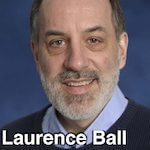
Jason Hartman starts the show discussing a lawsuit in bigdata. He ties this into commandment #3 – Thou shall maintain control. He looks at commercial spaces, specifically mall shopping center REITs. Later he looks at the migration trends in NYC, LA, and Huntsville, Alabama. In the interview segment of the show, Jason hosts Laurence Ball to discuss his latest book, The Fed and Lehman Brothers: Setting the Record Straight on a Financial Disaster. He discusses stimulus packages and future government assistance.

Announcer 0:02
Welcome to the creating wealth show with Jason Hartman. You’re about to learn a new slant on investing some exciting techniques and fresh new approaches to the world’s most historically proven asset class that will enable you to create more wealth and freedom than you ever thought possible. Jason is a genuine self made multimillionaire who’s actually been there and done it. He’s a successful investor, lender, developer and entrepreneur who’s owned properties in 11 states had hundreds of tenants and been involved in thousands of real estate transactions. This program will help you follow in Jason’s footsteps on the road to your financial independence day. You really can do it on now. here’s your host, Jason Hartman with the complete solution for real estate investors.
Jason Hartman 0:54
Welcome to Episode 1532 1532. Today, our guests will be Lawrence Paul, professor of economics at Johns Hopkins University, and research associate for the National Bureau of Economic Research. He’s also a consultant to the IMF, the International Monetary Fund. So this will be an interesting interview and we actually had him on again, this interview is in COVID-19, at four years. It’s a couple months old, but in that time, it’s it’s even older. So just keep that in mind but still totally relevant. So, and then we just had him on the show again, so we’re gonna, we’re gonna have him on again soon here in the next maybe, well, we’ll play that one next month or something like that. Anyway, so the Banana Republic, my former hometown of Los Angeles, has launched a $100 million Coronavirus Rental Assistance Fund. They say that the fund will help nine Well, up to they say up to 9000 renters stay in their homes. Now, a little quick math there. That means each renter, if they help up to nine of the full 9000 people that they’re saying up to is the number, right? They might help 3000 people, okay, then that means that would be earmarked $11,101 per renter. Yet they say in the article that eligible renters can receive up to $10,000 in rental subsidies from the county. So that means that I guess the administration cost is at least 1100 dollars per renter. Now, I don’t know about you, but that seems absolutely ridiculous that it would cost more than 10%. To dole out that money. Wow. Yes, some some corrupt officials will be grabbing their their share of that money as with any government program. That’s the way it works cantillon effect people that people close to the money, get the most of it. And with income property, you essentially can, in a sense, become one of those people that takes advantage of the cantillon effect. Now, we talked about that several episodes ago. Go back and review it if you want to know more. This is also interesting before we get to our guests, New York City, of course, has suffered from a massive, massive, massive decline in tourism. And this just gives you a perspective of how massive that decline is. Check this one out. So the Empire State Building, they have a well known observation deck you know, it’s been in many movies and romantic meetups scipy observation deck in the Empire State Building. What movie was that From Here to Eternity or something like that? I don’t know what movie but anyway, one of those old movies. And by the way, you know, I always tell you, you should watch old movies and old TV shows And, by the way, there’s a great YouTube channel. Forgive me. I can’t remember the name offhand. But I am now watching his documentary series on the Pandora’s box. Okay, Pandora’s box. But before that, I watched a series with three documentary films, it’s, you know, three plus hours, the subject of the century of self, where it talks about none other than Edward Bernays. I have talked to you about him before. And I think it’s very interesting to understand the history of Edward Bernays and modern advertising and how psychology has changed amongst consumers who used to really just be consumers of necessities and how consumer culture which is 70% of our economy in the United States, really just grabbed hold in the 20s Very, very interesting stuff for sure. Okay, so Empire State Building in the second quarter of this year, known as the COVID, quarter q2 2020. The empire state buildings observation deck, earn $86,000 $86,000 in revenue. Now you might think, well, that’s okay for an observation deck, multiply that times four. They’re making almost $400,000 a year. But guess what, guess what the compared to what question will tell you compared to what? Well, how about compared with the second quarter of the prior year? That same observation deck in the second quarter? last year? made $32,900,000? Yes, that staggering now this is from the Wall Street Journal. credible news organization from the WSJ. So there you go. There’s a comparison you can really just see how it’s just a it’s a monumental tectonic shift, of course. Huntsville Alabama, one of the several Alabama markets where we have properties for you go to Jason Hartman comm slash properties. Check them out in the median This is also a Wall Street Journal. The increase in median sales price for homes in Huntsville, Alabama. During the same quarter, the COVID quarter q2 of 2020. The highest quarterly home price increase for any city tracked by NAR the National Association of Realtors was 13.5% increase in median sales price in queue two. That is m balls. lievable Wow, all of these numbers I’ve just shared with you are absolutely staggering. They are really, really, really amazing. Now, on a totally unrelated note, well, no, it’s not unrelated. It is related. Of course, it’s related. But just I want to impart to you the idea again, that I have been saying since 2003, about how the US is such a giant housing market and consists of so many markets, and how if you are listening to or reading and following the information that is put out in the lame stream media, the mainstream media, you will just be so deceived about what is going on in the world. It’s absolutely staggering. And I’m not talking about politics here because that’s a whole nother topic. I’m just talking about the real estate market. In the United States. There are 390 days two essays or metropolitan statistical areas in the 3007 counties. Just again, think about that for a moment. That is absolutely mind boggling. Because even in those 3007 counties, there are many sub markets in those counties. Take for example, the one I just talked about, where I grew up. LA County, Los Angeles County, Southern California.
Jason Hartman 8:31
I mean,
Jason Hartman 8:33
how many different areas neighborhoods and real estate markets are there in LA? Oh, absolutely. Absolutely staggering number of markets. Really, really staggering. All right. Another one for you. Before we get to our guests, just one more thing. Shopping malls. We all know shopping malls are in big, big trouble and it is absolutely staggering what is going on with the retail apocalypse that has only been accelerated by COVID-19 84. And now, we are seeing, by the way I do understand it’s, I added the 84 to that you do get that right. But I’m, I’m tying it in with the Orwellian nightmare that we are starting to experience and will only get worse. Get ready, folks. Why is that? Wait till the contact tracing begins, wait until there’s an excuse to put chips in us so they can trace where we’ve been and who we’ve been in contact. First. We’ll start with our phones, then our smartwatches and then it will be the chip. I have Catherine Albrecht on my holistic survival show several years ago talking about the implanted chips that are coming. Yeah, they’re coming, folks. They’re coming. Remember, when the digital dollar arrives or the digital global currency. That’ll be the way that we We’ll be paying for things. And if we don’t use the chip, we’re gonna find it very hard to get by. This is the trap. Global fiat money is a global and national digital currency in any country is if you were to liken it to a game of chess, it’s check if it is a global digital currency that is, of course, sponsored by the government sponsored by the IMF, whatever. And then it has all trackable, and they can flick a switch to turn it on and off for an individual person, if they say a criminal was on the loose. Well, you don’t want to allow the criminal to have resources and be able to spend money. So if you want to, if you want to stop them, then you just turn off their chip. Boom, they’re done. That sounds pretty good for us law abiding citizens, right? We like that. But it’s always a slippery slope, folks. It’s always a slippery slope, isn’t it? Yes, it is. COVID-19 Before all this does is it gives governments around the world more reasons to track us to intrude and all this kind of stuff and it’s, it’s just here we go to the next stage it’s being accelerated. But how about the shopping mall market? Yeah, you don’t know what I’m going to tell you here. This is gonna surprise you. So I was talking about being a direct investor. commandment number three, thou shalt maintain control. And if you don’t maintain control, when you relinquish control to somebody else, you buy into a fund or retreat or real estate investment trust, or a stock or a bond, or any kind of private placement memorandum or a syndication or any kind of deal like someone else’s deal. You give control to somebody else, Wall Street, whatever it is, you give control. Well, you tend not to feel the bumps in the road the problems that occur but you do Feel it when you just make less money or you lose money on your investment? Well, here is a roundabout example of that. That’s hugely significant. A lawsuit has been filed a lawsuit that says giant mall REITs real estate investment trusts are licensed to spy. A sweeping class action lawsuit claims that malls are swiping data from vehicle license plates. This according to the real deal. Los Angeles is biggest mall landlords are beating back a consumer lawsuit related to license plate recognition technology. The world of big data folks here we are here we are. The class action says that mall patrons are suing because of smart parking security companies and more landlords that have captured their life. plate images. And they did of course they didn’t authorize this. And of course, the mall owners claimed they did it for security purposes because it’s always to protect us. That’s what the government always says to the government’s always protecting us now the mall owners are protecting us. And air the article goes on to say, quote this is about the worst time for mall reads to be hit with legal actions. Indoor malls aren’t open in LA under a month old executive order. I corrupt governor Gavin Newsome the article didn’t say corrupt. I threw that in for fun. He’s always on. And the more landlords themselves have filed lawsuits against non paying tenants. So of course, they’re suing their tenants for the rent. They’re not paying because the tenants defaulted on the rent. And now there’s a class action suit from consumers saying, hey, you didn’t have any right to to scan my license plate, stick it in a database. And of course, what do they do with that data? Who knows, but I’m sure they’ll find out and discovery in the lawsuit. And they’ll find out things probably like they match them with other database records and hired Big Data companies to come in and tell them who was shopping at their mall and identify them. And maybe they even combined it with a facial recognition database. Who the heck knows? It’s all absolutely crazy. But But think about this. If you’re an investor in these mall reads, these real estate investment trusts a very popular investment by the way, if you’re an investor, and now they’re having to spend all this money, number one suing their tenants who don’t pay rent, and then they’re getting sued by these consumer groups in this giant sweeping class action lawsuit for their license plate scanning practices. You know, when you relinquish control, when you’re not a direct investor, you are losing money because of all of these things. What happens when there’s a sexual harassment lawsuit or an employment discrimination lawsuit, or, you know, the Board of Directors has just taken more than they should or the CEO is embezzling money or the treasurer or whatever, you’re losing money, be a direct investor, just buy some properties of your own and control them. And better yet, join our empowered investor inner circle, which I will be inviting you to shortly. We invited the people that attended meet the Masters first. And by the way, I love it people. You’re having a good old time in that group so far? And and we’re just beginning. This is just the beginning. We haven’t even gotten into the specific market resources yet. We’re just talking about which loan should I pick? Which property should I refi I got a whole bunch of savings with my tax assessments, outlook on the economy. This is great. This is gonna be one of the best things we’ve ever done is the empowered investor inner circle. Don’t worry, worry not folks. We will invite all the rest of you to it here shortly. Alright, so without further ado, let’s get to our guest. And let’s talk about some interesting issues. And just a reminder, this interview was recorded just a few months ago. You know, it’s there’s some mention of current events, just adjust your timeframe for that, but I think you’ll find it to be very, very fascinating. If you need us reach out. In the US, you can call one 800 Hartman worldwide, Jason Hartman calm it’s my pleasure to welcome economist Lawrence ball. He’s professor of economics at Johns Hopkins University Research Associate at the National Bureau of Economic Research, a former consultant to the International Monetary Fund, previously a visiting scholar at the Federal Reserve Bank of Japan, Bank of England, and the Reserve Bank of New Zealand. He’s also author of the Fed in Lehman Brothers, setting the record straight on a financial disaster. Lawrence, welcome. How are you doing?
Laurence Ball 17:02
Thank you Well, like everybody I’m doing as well as I can under the bizarre circumstances.
Jason Hartman 17:07
I’m guessing they sent you home and you’re not at the university, right?
Laurence Ball 17:11
Indeed, I’m sitting in my apartment and watching a lot of videos. Yes.
Jason Hartman 17:18
As, as we all are, as we all are in these trying times,
Laurence Ball 17:22
where are you located? What city? I’m in Baltimore, I teach at the Johns Hopkins campus in Baltimore. Okay, so you’re actually at the campus usually good.
Jason Hartman 17:30
Well, hey, we talked a little bit off here before we started, about the pandemic, the response to it. I said to you that I thought the response was sort of bigger than the problem. But you know, maybe I’m wrong about that. You know, none of us want to pretend to know anything about the public health and the clinical side of this. We’re strictly talking about the economic impact. What are your general thoughts to start us off?
Laurence Ball 17:56
Well, my general thoughts again, I think neither you nor I I can judge the medical necessity of closing everything down and everybody staying home. But I think from the point of view of economists or people in business, we can just take it as a fact that the public health authorities have decided that the economy or large parts of the economy have to shut down for a while. I think what economists can be sure of, and really it’s just common sense is that that’s going to be hugely harmful to the economy and cause a big recession, certainly for as long as we have so much shut down and quite possibly with effects that last for a while after that. And and and then the corollary of that is that we need a very strong and very rapid response by policymakers.
Laurence Ball 18:47
Right. Right. And
Laurence Ball 18:48
or are we getting a strong enough and active enough response from policymakers or, you know, as the jury’s still out, we’re still in the early stages, obviously, but have been somewhat encouraged that Congress and the administration seem to be moving very quickly on a big fiscal stimulus package. I mean, comparing this to 2008, the obvious comparison, you know, the Obama stimulus happened a number of months after the height of the financial crisis. And it was very controversial. It passed with no Republican votes. It was, in retrospect, probably too small. And there actually seems to be, you know, one was thinking that it could bipartisanship, bipartisanship was dead forever. But it seems as though to some degree, everybody is on the same page that we need a huge fiscal stimulus very quickly. And there’s certainly possibility for squabbling over the details that derails things or slows things down. I hope not but I’m hopeful that the checks will start going out in the mail and other things will start happening that that will push in the The problem,
Jason Hartman 20:00
what’s really interesting about this is that it may be the first self imposed recession, possibly ever. I don’t know, maybe I haven’t studied now for sessions, but I can’t think of one in the past that was really self imposed like this. One is
Laurence Ball 20:19
I think that’s absolutely right. Or a different way to put it is it’s the first, in a sense, desirable recession. I mean, usually, when we’ve had recessions and people have gone home from work, and not been productive and not had income. That’s been been an unambiguously bad thing, you know, because of some mishap, in some sector of the economy. But here we’re making a conscious choice. So the public health authorities are that it’s worth the cost of people not working and producing in order to protect health. So you’re right. I mean, desirable is a funny word to use, but you know what? It’s better to have production go down, but the risk Of course is that or one of the risks is that it could go down by more than desirable amounts that there will be spillovers to other parts of the economy and over time, which will greatly magnify the economic loss beyond what’s strictly necessary for public health reasons.
Jason Hartman 21:17
You know, what I’ve been pondering is the idea that, you know, as soon as Mitt Romney came out and said, you know, send everybody $1,000 check. Well, I guess now, if that’s increased 20%, we’re going to get a 1200 dollar check. So that’s great. I’m looking forward to seeing mine in the mail. But, you know, this almost might be a prelude to a universal basic income and or some sort of nationalized Housing Assistance Program like the section eight program that’s been around for so long. Do you have any thoughts on that or if you made that connection, like I have, or haven’t thought about it,
Laurence Ball 21:53
it could be of course, in the Great Recession, the Great Depression of the 1930s there were at the time policy measures which had a lasting impact, you know, social security and a lot of the federal programs are legacies of that. And it’s certainly possible that we could ratchet up the level of government involvement in the economy in this episode as well. I actually saw I forget where I saw this, somebody in the internet was saying, the era of small government is over, turning around Bill Clinton’s talk about the euro. I mean, that’s right, that there’s been a lot of talk way before this about the idea of a universal income. And this
Jason Hartman 22:34
show, you know, several months ago so yeah, yeah,
Laurence Ball 22:38
he’s he’s out there. But the episode once it once it’s that’s introduced under emergency circumstances, people, it certainly is conceivable, people will say, Well, why not just make it permanent?
Jason Hartman 22:48
Yeah, you know, and just for the record, I’m not for any of this. I like a small government, but I don’t think that matters what I think we are living in a new terror. torey and, you know, it almost seems like because so much of the economy around the world has become so financialized that you’re just gonna have these cycles, you’re gonna have big swings, because there’s a lot of leverage in the system. And that that increases the volatility, or at least the speed at which things happen, right?
Laurence Ball 23:22
Yes, although so far, knock on wood. I have not seen huge problems in the financial system. I mean, there have been some things that have flared up, but that then I think, is on top of that, you know, with the commercial paper facility and, you know, so far, there’s nothing that isn’t manageable has happened financially, although, of course, you know, who knows if we go down the road further, right. You know, if if lots and lots of people are in financial distress and don’t pay back their mortgages and lots of businesses don’t pay back their loans and then the lenders are going to get into trouble. And as you say they’re leveraged and you know that then we could start to have something harkening back towards 2008 when big financial institutions get in trouble. Well, that’s a good segue to your book and to making, you know, any comparisons or parallels, this is such a different kind of environment we’re in now, a lot of people out there saying, we were due for a correction. Anyway, the stock market was overvalued. We were in the everything bubble. And this is just going to get us there faster to that correction. When I likened it to a bear in hibernation, which is what the economy is in. It’s kind of going into hibernation mode, you know that Barrett can wake up with a yawn, or it can wake up with a roar, I guess. Right. You know, the question is, how long does it take us to get back? We’ll certainly get through this. But, you know, what does that recovery looked like and how quick does it happen? You know, this is a great question because Of course, nobody really knows because this is totally unprecedented. I mean, I’d say, first of all, if if we had a bubble or an overheating of the economy and needed some correction, we certainly didn’t need this much of a correction. You know, with the stock market falling not much for that matter with, you know, with me and hundreds of millions of other people sitting in their apartments, not not going to work. You know, we’ve had way more than anything that would have been necessary, just as a natural correction, aside from the virus. Yeah, as far as the bear wiki from hibernation? That’s a great question. It’s, of course, it all depends on you have to premise it on what you assume about the public health situation. But let’s just say for the sake of argument that everybody stays indoors for three months, and then there’s the all clear, you can go back to your normal activities. Will everything snap back at once? And there’s reason for concern there because, you know, we already see people and firms And possibly banks getting into financial distress. And that’s after one week, after three months, there might be a lot of financial distress and you know, who knows bankruptcies? That’s the kind of thing which cannot be turned on and off easily. So, you know, while we’re in the shutdown period, it’s important, very important for policymakers to try to minimize how much disruption there is to the finances of people and firms and banks so that we can get back to normal swiftly, when when it’s possible is and
Jason Hartman 26:37
I meant to make that segue we did sort of didn’t quite do it because of the compound question there. So we’ll get to it in a moment. But can the government and the Fed solve the problem by simply just creating more money more QE more stimulus, or are they running low on ammunition?
Laurence Ball 26:56
Well, certainly the government The Fed the feds a little trickier, but the government, I think, has plenty of ammunition in being able to write checks and send them out. So obviously the that that doesn’t solve the health problem, but as far as mitigating the economic effects, really is pretty simple that when people or firms are in financial trouble, that setting up a lot of money will will help a lot. And the federal government can do that. Of course, it makes the long term debt problem, even more of a problem, but that’s maybe a problem for to start thinking about, again, six months from now. So the government can do a lot of good and cushioning the economic impact.
Jason Hartman 27:40
Okay. But is the Fed running out of ammunition? So you said the government but you made a distinction really well, so the Fed? I mean, interest rates are so low, are they just too low already to do anything?
Laurence Ball 27:53
Well, yes, certainly they’ve run out of the interest rate ammunition, I mean, interface across the board are close to zero and I can maybe go a little bit below zero, but not, you know, for all practical effects, you know, the first line of defense of cutting interest rates that that’s been used up. I haven’t heard too much discussion about this a little bit, you know, that the Fed could intervene more aggressively directly in creating credit. I mean, people have floated ideas about the Fed to start lending money to, to businesses or people or or maybe maybe do it through the banking system lend money to banks on the condition that they lend it on. I mean, that would be quite radical. I mean, actually directly providing credit to firms and people is not the role of the Fed traditionally, but, you know, if we think this is really a once in a century, disaster, then we should maybe think outside the box. Absolutely. Okay.
Jason Hartman 28:49
So getting to your book
Laurence Ball 28:52
a bit here, which is fascinating. By the way, it was recommended by a guest we had, I think we published that show just Welcome to Just recently, and that was Michael Ainslie who was chairman of Lehman Brothers holding company, and oversaw dispersing assets and so forth during the bankruptcy. Tell us about 2008. And some of the backstory, some of the things people may not know about, you know, any anywhere you want to take it, you know, what caused the crisis, all kinds of talk about that, obviously, the last 12 years, or specifically Lehman, whatever you’d like. Sure. Well, I guess, you know, the very condensed version would be there was the housing bubble and a lot of losses on real estate investment. I, the big Wall Street firms, and they were extremely elaborate. So they got in trouble. And we’re on the brink of bank bankruptcy. And then the critical issue was the Federal Reserve going to rescue these institutions. And the way it played out, they rescued everybody but Lehman Brothers, and I know the school of thought that it’s good that they rescued everybody. You know, we could have had if, if a whole bunch of big banks have gone down, we could have had an 1830 style depression. On the other hand, you can say the glass is half empty or half full. The failure to rescue Lehman was was a big mistake. And I think the whole financial crisis and great recession could have been much more mild. If they had pre deleted them the same way they treated Bear Stearns and AIG and the other firms they they rescued, you know, you have to wonder if just if the relationship with Dick fold and Hank Paulson were better, that might have changed the world that just is like a religious literally came down to sort of two guys and their personalities, to some extent didn’t. You know, I’ve heard that story. I think that is maybe a little overstated. My I mean, I I do think it was a political decision primarily by Henry Paulson, not to rescue Lehman, even though legally it was the feds decision, I think, for whatever reason, they were taking guidance from him. And I think though, the main thing that influenced Paulson was not anything personal. It was the political situation at the time Lehman got in trouble. And in a sense, Lehman’s bad luck was to be the second in line in having a crisis that the first being Bear Stearns, which the Fed rescued, but then actually Bear Stearns and then Fannie Mae and Freddie Mac right before Lehman, you know, that created a huge political backlash about about bailouts, you know, across the political spectrum. You know, Bernie Sanders was talking about socialism for the rich, you know, the conservatives are just talking about just playing socialism with the government, taking over banks. You know, people of all stripes are saying this is this is horrible. And I think that’s what led Paulson to feel that politically, he couldn’t rescue Lehman. And the after that, of course, the next day, they rescued AIG and a bunch of started helping everybody. I think, because I think To the credit under Bernanke and Paulson, in a while they made a mistake on September 15, or September 14, when they told Lehman they had to declare bankruptcy, they realized pretty quickly that it was a mistake. And they changed course and prevented things from getting much worse. Of course, that’s not the story. They tell they they say that their hands were tied legally, there was no way they could rescue Lehman. But the main point of my book is that that’s, that’s not, that doesn’t fit reality that they could have rescued Lehman if they wanted to. Right. Right.
Jason Hartman 32:30
So you know, what else happened? That maybe we don’t know is, you know, so many people have studied this story and other related stories to the Great Recession over the last, you know, 10 to 12 years. What would be some of the surprises that, you know, might surprise people that they didn’t see in a movie or, or read in a book, you know,
Laurence Ball 32:51
well, maybe one thing to say is, again, the crisis and the recession, really didn’t have to be nearly as bad You know, again, there was the housing bubble. There were problems with real estate, there are going to be some costs to that. But I think that kind of thing has happened before, I think about what if the Fed had rescued Lehman. And we hadn’t had the meltdown on Wall Street. I think that 2008 might have been, might be remembered the way we remember the savings and loan crisis of the 1980s or the bursting of the.com bubble in the in the early 2000s. I mean, those were things where there were mishaps in the financial sector and a lot of drama and some effect on the real economy. You know, they were mild recessions, but it was really sort of an unnecessary, unforced error to allow Lehman to go down and then all the things that flowed from that the run on the money market funds, you know, the different kinds of panic, which the harm to the economy was magnified way beyond what it had to be
Jason Hartman 33:57
very interesting and it’s really too bad. have what it was that it did go that way. How did the economy like it’s almost maybe hard to see this now, but let’s just go back to the economy prior to the Coronavirus News. You know, it wasn’t that long ago. Were we due for a correction? We kind of alluded to that earlier when we were talking but, you know, we’re we do for a serious correction, or what are your thoughts about the way things were going then? You know, and I’m talking about three, three to four weeks ago.
Laurence Ball 34:30
Right, right. An ancient history, ancient history. I don’t think we were due for a big correction, certainly in in the real economy. I mean, maybe 3.5%. Unemployment is not sustainable. You know, maybe it had up to 4.5% at some point. But you know, the fact there’s the cliche that people repeat that reset that expansions don’t die of old age. I mean, there’s no reason that just because the economy is growing for 12 years that it’s doing For something bad to happen,
Jason Hartman 35:02
so so you wouldn’t buy into the sort of business cycle theory, then it sounds like
Laurence Ball 35:07
no, not a deterministic, I would say, you know, it’s the same as if you’re a careful, good driver and you drive around. You could have an accident at any time. But if you tell me Oh, you haven’t had an accident in five years, I wouldn’t say, Oh, no, you’re due for an accident.
Jason Hartman 35:23
Statistically, you are but Right,
Laurence Ball 35:25
yeah. Well, someday, but the fact that the fact that you’ve been driving safely for five years would make me less concerned rather than more concerned about you having an accident in the near future. And similarly, I think the fact that the economy has been doing well for the last 12 years minus two weeks, you know, would have been reason to, you know, be somewhat optimistic about keeping things steady. Yeah.
Jason Hartman 35:49
So where do you think we go next, just wrapping it up with any anything you want to say? Maybe question I haven’t asked you. You know anything anything about the book, the great recession or current day
Laurence Ball 36:00
Well, maybe I’ll say I mean, going going back to the book, just where I probably have the comparative advantage. I’ve studied it a long time. Again, getting back to your question to what do people not know, I think, you know, one message of the of the book is just that you should not believe what Ben Bernanke key. Hank Paulson and Tim Geithner have said about the Lehman episode. They have in you know, in various books, and speeches and so on and their memoirs, they’ve developed a narrative about what happened with Lehman, we tried to rescue them, they didn’t have enough collateral, this was inevitable. And that just is not what happened in reality. You know, the reality is really quite different, that they lost their nerve politically, and that’s why Lehman wasn’t wasn’t rescued, you know, where we go from, where we go today from the from the current, you know, the virus, I think, from an economic point of view, just, you know, I really hope I you know, Following is pretty close to like a lot of people and just today, the Democrats and the Republicans have differences about who gets how much money, you know, some people get 1200 and some people got more or less depending on their income. And, you know, those are fine issues to debate about in principle, but I hope that they are very compromise minded and just get something done very, very quickly.
Jason Hartman 37:22
Yeah, absolutely. And they’re gonna have to do something right after that. I mean, unless, unless the sort of shelter in place ends in two or three weeks. They’re gonna need another check pretty pretty shortly after that. I mean, it’s, you know, that’s, yeah, that’s not gonna go very far. Absolutely. All right. Well, hey, thank you so much for joining us. Did you want to give out a website or any resource?
Laurence Ball 37:47
Well, I guess I have my Johns Hopkins website of the Johns Hopkins economics department. Or you can find by googling My name Martin Lawrence ball Lawrence with the EU. I have resisted Later.
Jason Hartman 38:02
So just my old fashioned website is my only online presence. Good stuff. Well, Lawrence ball. Thank you so much for joining us. The book is available in all the usual places the Fed and Lehman Brothers, setting the record straight on a financial disaster Lawrence, thanks for joining us.
Laurence Ball 38:18
Thank you very much.
Jason Hartman 38:24
Thank you so much for listening. Please be sure to subscribe so that you don’t miss any episodes. Be sure to check out the show’s specific website and our general website Hartman. Mediacom for appropriate disclaimers and Terms of Service. Remember that guest opinions are their own. And if you require specific legal or tax advice, or advice and any other specialized area, please consult an appropriate professional and we also very much appreciate you reviewing the show. Please go to iTunes or Stitcher Radio or whatever platform you’re using and write a review for the show. We would very much appreciate that and be sure to make it official and subscribe so you do not miss any episodes. We look forward to seeing you on the next episode.