
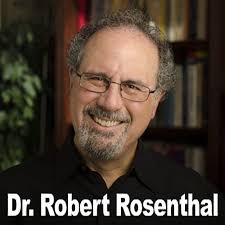
For this 10th episode, Jason Hartman hosts Dr. Robert Rosenthal, Co-President for the Foundation for Inner Peace. They discuss the idea of miracles outside the idea of organized religion. Dr. Rosenthal explains his understanding of ego and how it impacts our lives. He looks at a few life-changing concepts that are very powerful, especially forgiveness. Later, he illustrates how and why we seek security in our lives.
Announcer 0:02
Welcome to the creating wealth show with Jason Hartman. You’re about to learn a new slant on investing some exciting techniques and fresh new approaches to the world’s most historically proven asset class that will enable you to create more wealth and freedom than you ever thought possible. Jason is a genuine self made multi millionaire who’s actually been there and done it. He’s a successful investor, lender, developer and entrepreneur who’s owned properties in 11 states had hundreds of tenants and been involved in thousands of real estate transactions. This program will help you follow in Jason’s footsteps on the road to your financial independence day, you really can do it on Now, here’s your host, Jason Hartman with the complete solution for real estate investors.
Jason Hartman 0:54
Welcome to the show, this is Jason Hartman, your host and every 10th episode, we do something kind of special kind of different. What we do is we go off topic, so regardless of which show it is on the Hartman media network, whether it be one of the financial shows economics, real estate investing, a travel, longevity, all of the other topics that we have every 10th episode, we go off topic, and we explore something of general interest, something of general life success value. And so many of our listeners around the world in 164 countries have absolutely loved our 10th episode shows. So that’s what we’re going to do today. And let’s go ahead and get to our guests with a special 10th episode show. And of course, on the next episode, we’ll be back to our regular programming. Here we go. Hey, it’s my pleasure to welcome Robert Rosenthal to the show. He is the CO president of the foundation for inner peace. And I first want to tell you before anything, we are not talking about religion today, this is not a religion. Okay. This is a course that I discovered many years ago. And it really had a great impact on my life. Here’s what happened. I’ll just tell you my little story about it. In my 20s, like many people in their 20s, I was looking for answers and just really fascinated by a lot of things. I used to study philosophy and just different stuff, a lot of stuff. As I was doing that. I came across a great book, maybe it was recommended to me by possibly Denis waitley, I’m not sure. And it is the book called Love is letting go of fear by Dr. Gerald jam Polsky. And it was a little tiny book, but very profound, very impactful book. And it talked about or jerell did when I followed up on his work and talked about this thing called A Course in Miracles. And I started reaching out and learning about this. And it was quite fascinating to me. Now we have the man who probably understands it more than anybody else. Witness today. So it’s a pleasure to have him Bob, welcome. How are you?
Dr. Robert Rosenthal 3:05
I’m great. Jason, how are you doing?
Jason Hartman 3:08
Good. It’s good to have you and you’re coming to us from Northern California, right? Yes, I am. That’s trying right stuff. Good stuff. Well, you know, the first thing I’d like to ask you is kind of to my comment earlier. Are we talking about religion here?
Dr. Robert Rosenthal 3:21
Yeah, no, in no way shape, or form? Could you conceptualize A Course in Miracles as a religion? You know, there’s no priest, there’s no hierarchy, there aren’t even any dogmas to follow. You know, like taking communion or confession, of course, in miracles is best understood as a self study course. It’s, it’s just, it’s the books, and you work with them in whatever way you choose. We hear stories all the time about someone who gets them very intrigued. looks at it goes out. I think this is for me, sticks it on the bookshelf. 10 years later is looking at the picture. Now what was it about that, and suddenly, you know, the next 10 years of their life are devoted to the course. So it kind of meets us where we are and sometimes where we are is not ready for
Jason Hartman 4:07
any religious groups or anything picked it up because I seem to recall me years ago going to, I don’t know, a seminar or a I don’t want to call it a church. But tell me about that. Is there anything
Dr. Robert Rosenthal 4:19
for unity churches have picked it up and in fact, back quite a few years ago is the source of a real schism in unity where half the people didn’t want it there because they thought it muddied the message of unity. The other half thought it was an amplifier of the message of unity. I’m not going to weigh in on that one. I mean, the core stands on its own, whether someone endorses it or not. In fact, one of the things that I’m constantly having to do in our organization is sort of hold people back on would look we could market this weekend. We can have you know, many millions more users and we have to say, That’s not our job. Our job is to publish it, distribute it, make it available and discuss its message so people can understand it better.
Jason Hartman 5:00
Good stuff. Well, let’s dive into the message. And we’ll go back to some of this stuff. So for those of you watching on video, you’ll see this but if not, and you’re just listening on audio, we’ll try and make it, you know, very clear to you what we’re what we’re looking at. So this, as I recall, many years ago from reading this, I think it starts off
Dr. Robert Rosenthal 5:20
with this, right? No, no, this is chapter 16. But it is. No, it’s a consistent theme, this message shows up all through.
Jason Hartman 5:30
So so let’s read the message. This is a course in how to know yourself, you have taught what you are, but have not let what you are teach you. It sounds a little double talk ish there. But what does that all makes
Dr. Robert Rosenthal 5:46
very typical of how the courses language works, and that it does force you know, it’s very difficult to just read it in, sort of scan it and move on. It throws these passages at you, where you have to kind of pause and go, Wait a minute, you have taught what you are, but have not let what you are teaching you. And yet it’s right here, we have taught that is we’ve put out in the world, what we think we are would be a better way to phrase it, perhaps. But we have not allowed what we really are to teach us what we really are. Now, what are we A Course in Miracles says we’re one mind, we’re one self, that self is nothing but love, it is practically indistinguishable from what the course calls God. Although that concept of God is closer to a Hindu Brahmin idea, you know, it’s just all of it is all that can be all that can ever be. So the course is saying, Yeah, you’re living this fiction, of what you think you are and what the world is. And within this fictional world, you discover all of these pursuits and things you think you want, you want certain relationships, you want certain homes, boats, cars, income levels, you know, you name it, you want fame fortune. And the problem is, at the end of the day, even if you get it, you’re gonna die. Yeah, your body will, will poop out on you. And so what the course is, is advocating is that you can discover a different aspect of self is always there, always peaceful, always loving, if you can get out of the way and let it through. And, you know, there’s the trick, of course, in miracles says, we haven’t left our true nature, we can’t do that, you know, we were created to be this thing. And we don’t have the power to change that. But we certainly have the power to be a little bit psychotic, a little bit insane. And go, No, I’m not that I’m something else. I always joke that, you know, if a dog thought it was a cat, it would never be happy playing with balls of string, just like a cat would never be happy chasing after a car. And each one has to be true to itself in order to find real happiness.
Jason Hartman 7:52
That is a goal of the course. So the message here is Be true to oneself.
Dr. Robert Rosenthal 7:57
Yes, but with the caveat that what you think that self is, probably is inaccurate. And, and you know, look, there’s a great line in the course on something to the effect of fear, nothing will be lifted up and hurled into reality, we can only progress at a rate that feels comfortable for us. You can’t learn through fear, fear will scare you fear pushes us back into what the course calls the ego mind, which is what most of us identify with, oh, let’s make plans for the future. Let’s figure out how we’re going to handle this. And what the miracle is, essentially, is you don’t know how to handle it. But there’s something within you equally within everybody else, you’re not special, that can do a much better job of figuring it out for you.
Jason Hartman 8:43
So one of the things that I think is just incredibly impactful, maybe one of the more or maybe the most impactful line in the entire course, is something that to some extent, we’re all seeking security, right? Whatever that means. You know, in Western culture, a lot of times it means like financial security later in life, it almost always means health, security, maybe it’s ego, security, whatever. This is, right, this concept of security as I’m going to put it, and there’s a very freeing statement and it’s on the next slide. Okay. And I think this is just profound. It’s just totally profound. And it speaks to and I don’t want to turn it to that slide yet it speaks to attachment, and inner peace. I think when one internalizes this statement, and it’s probably been been said many other ways, throughout the aeons, but here it is. This This one is one I really, really like okay, and it is nothing real can be threatened. Nothing unreal, exists. Herein lies the peace of God. Nothing real can be threatened. Now. Many of us and certainly myself, I at times, feel threatened, like, oh, gosh, you know, someone’s gonna take my money away or take my security way or make me look bad or something like that. But the course just teaches you that really, nothing can be threatened. And nothing real, or you know, whatever we think real is right. But nothing unreal actually exists anyway. Right? Tell us about this. unpack this clue.
Dr. Robert Rosenthal 10:27
Yeah. So this is an introduction on the very first page of the text of a course. And
Jason Hartman 10:33
this is the one I was thinking this is the one you’re thinking of?
Dr. Robert Rosenthal 10:36
Yes. So right there. And it’s a three line summary in in capitalization of the entire message of A Course in Miracles, which is essentially a binary, look, there’s only reality exists only truth with a capital T exists, you can’t threaten that. Therefore, if you’re coming from that place of truth, you begin to see that all those other things that security needs you were talking about, they’re just no longer material. I’m not saying you don’t want them and you don’t go after them. But they no longer run your show, they’re no longer priorities, they’re no longer Oh, my God, I’ve got it, you know, there’s no such thing as a bucket list. And of course, in miracles, let’s put it that way, then you get to the other side of it, nothing unreal exists, which, you know, it’s just simply the, you know, the corollary, if you will, that, if you’re standing in that place of reality, then nothing, you’re invulnerable, you know, nothing else can touch you. And we do get our challenges, and we get our lessons, you know, but I agree with you, I actually think Jay Z, and Beyonce incorporated this into one of their songs a couple years back,
Jason Hartman 11:42
talk about a pop culture reference. Yeah, interesting, interesting. Well, you know, um, this is tremendously freeing this concept. And, you know, just to take it to sort of the practical world, if you will, we’ve all heard the stories, maybe we’ve experienced them, you know, that job, we didn’t get that promotion, we didn’t get, or maybe we got laid off, or fired, or we lost a bunch of money or something happened, that would seem quote, bad, unquote. But it turns out to be as you know, many would call it that saying the blessing in disguise, yes. And sometimes, you know, sort of losing your money, or losing that job, we realize there’s like a whole nother path. That is actually turns out to be a path we really like. And, you know, it’s fulfilling. I mean, we’ve all heard of the person, you know, now, we’re still sort of in the world, I’m going to use those that phrase, because I think that’s used and in the course, a lot, but just in the world, the concept of, you know, the person who gets fired from their job is massively depressed about it. Turns out, they make a fortune doing something else. And they’re much happier. So we’ve all heard that, but that’s in the world concept, but even not in the world. And maybe you want to address that in the world stage. And I don’t know if I’m getting that right from from memory of the course. But
Dr. Robert Rosenthal 13:10
well, you know, I mean, in the same introduction, this is the very end of this, this short introduction, in the same introduction, it says, basically, your your job is not to create, establish what is already real, that’s already there. Your task is to remove the blocks to the awareness of love’s presence, which is your natural inheritance, which is you’re not, in other words, this huge, vast treasure, chest of, of oneness, love, light, peace, all the good stuff, Happiness is your true reality. But you’ve erected blocks, you’ve erected false gods idols. And the idea is, if you’re chasing after an idol, you’re not going to be able to find what is really there. Now, some of us have to chase a lot of idols before we finally get to the point of You know what, I think I’m going to stop. I mean, the line that sparked the course, was Bill, I’m saying to Helen, there must be a better way, because there comes department and Columbia, you know, was intense and backbiting and competitive. And he said, there must be a better way. And he was shocked when she said, I’ll help you find it. You know, a couple of months later, the course starts coming through. I don’t think that we’re looking for the course.
Jason Hartman 14:24
And most people don’t know what you’re referring to these are the two scribes. Yes, exactly. Thank you. And interestingly, they they’re referred to as scribes, not authors. They didn’t write the course. And here’s where maybe you get this, like, affiliation with them. Right. So maybe you want to explain that and speak to that.
Dr. Robert Rosenthal 14:41
Yeah. So it’s pretty clear that the author and I put it in quotes, because this is a subject of some debate, even among core students, that the author is is Jesus because He addresses the disciples and what I said this and this is what I meant. Suffice to say the question Worse presents itself as a reinterpretation of the Christian message. Therefore, it is using Christian terms, like God like Christ, like atonement, like forgiveness, like heaven, but it’s repurposing them. It’s giving them completely different definitions. This gives a lot of students real problems. I mean, you know, I was born Jewish, I was Bar Mitzvah, I don’t practice much. But reading a book, where it’s talking about Jesus and disciples and the crucifixion, that did not come easy. And I probably would have put it aside, if I hadn’t encountered some pretty astounding, what I call miracles, miraculous occurrences very early on, that sort of shook me and said, pay attention. There’s something here, because you know, it’s like a mathematical algorithm. If you’re applying algorithms and they don’t work, then they’re not true. They’re not real. Whereas when you take something that’s completely out of left field and apply it, and suddenly, everything makes sense, that’s probably truth. And that’s a good characterization. I mean, of course, is very clear. It’s not about theology, it’s not about trying to establish itself as a universal religion, it’s about getting us to a certain experience. And once you have that experience, it’s very difficult to credit the world in which we think we live with all of its security names, as you called them, Jason quite accurately about the way
Jason Hartman 16:25
in where does the the ego come into this? I think, I think the course said, the ego and the true self. Is that was that the dichotomy? That’s
Dr. Robert Rosenthal 16:34
the dichotomy. Yeah, and we would have to spell self with a capital S, because the course loves capitals. So the ego is kind of like this weird side effect. When an aspect of God oneness, what the course calls the Son of God, and it does use this, this patriarchal language, because it’s, you know, trying to correct the Bible not correct, reinterpret the book, you know, when that which is all there is somehow limited itself and condensed itself into this much, much smaller space time. This side effect arose in particular once we saw concern ourselves as in a physical body. And the course calls that the ego This is not the Friday and ego, but there is a similarity and of course, in miracles could not have been written prior to Freud, because it uses a lot of Freudian concepts like, like a defense mechanism, dissociation, projection, repression. So the ego is what we tend to identify as ourselves, the ego is that nothing unreal exists. That’s the ego doesn’t exist, you know, in the clarification of terms section at the end, asks, you know, what is the goal and one of the answers is nothingness in a form that looks like something, and the course is very clear, the ego dies, the ego will not last past death, just like the body dies. But that there is again, that within us, which is our reality, our capital itself, that can’t be killed it because it was never born, it doesn’t live in the body, the body. You know, I use the analogy sometimes of a game of Monopoly, you know, you can sit down and play Monopoly, and you move your piece, the car, the hat, whatever, around the board. But never do you confuse yourself with the piece. You never go psychotic and say, Oh, yeah, the car is me. And my only task in life is to buy up as much property as possible. And I realized this is sort of apropos of your field.
Jason Hartman 18:32
Because most of our listeners are real estate investors.
Dr. Robert Rosenthal 18:35
You want boardwalk and Park Place, I get that. But you
Jason Hartman 18:40
never delude yourself. We prefer Baltic Avenue.
Dr. Robert Rosenthal 18:47
is a gem.
Jason Hartman 18:48
Those have rent better rent to value ratios, but Okay,
Dr. Robert Rosenthal 18:51
that’s great.
Dr. Robert Rosenthal 18:54
Pay attention to this man. But yeah, but we never confuse ourselves with our playing piece. You know, it’s kind of like a virtual reality simulation, or for those who’ve seen the movie, the matrix, the movie, the matrix, you think you’re in this reality and it’s very compelling and it throws a lot of very compelling things out us that we want to pursue. But ultimately, they’re all mirages, they all go poof at the end of the day.
Jason Hartman 19:19
That is super fascinating in so it sounds like what you’re saying, just correct me if I’m wrong, that we do a lot to satisfy the ego. Okay, because it’s part of all of us, right? We do a lot. I mean, some people spend their whole lives chasing all these, you know, schools that are what
Dr. Robert Rosenthal 19:41
most people do,
Jason Hartman 19:42
most people yeah, and spend their whole lives chasing all these squirrels that they you know, that they’re that are like the ego, right, and they’re all going in different directions. But, I mean, some of that is real. I mean, it’s not all fake, right. And the interesting thing that’s hard for me to record Silas, you know, a lot of people, I think give the ego a bad rap, in essence. And if you read and I’m, I have a feeling just by where you live, and from what I know of you so far, you’ve probably read ein Rand. Okay. You know, that was
Dr. Robert Rosenthal 20:15
not I’m sorry.
Jason Hartman 20:17
Interesting, I think almost that you have. And so, you know, that’s like a complete opposite saying here, but see, without some degree of ego, it doesn’t seem like there be any progress, because that’s like a motivating thing,
Dr. Robert Rosenthal 20:32
I need a placeholder to be here. Okay, you know, so there is a certain contingent within the course community that says, Well, you know, reality is real, nothing here is real, I don’t have to do anything, I don’t have to, you know, I’m just gonna sit here and kind of, you know, run out the clock, we’ll pass the ball back and forth. And, you know, make them do a full court press to get it out of our hands. That’s not what the course is saying. The course is saying that we have all erected so many of these obstacles at so many different layers, that we don’t even know what they are. So when we sign on, we basically have signed on to a curriculum that we don’t even know what it isn’t first. But we sense that there’s a truth to it. And when we start applying it, things just start working better. No, no, that doesn’t mean you give up everything I tell people. Of course, miracles came into my life at the age of 20. For five years, I studied it avidly. Then my first wife whose older brother was a Jesuit priest, and she was raised Catholic and the courses Christian terminology was a total non starter for her. I kind of parted ways for a little bit, it was always the cornerstone of my world. But we come in and out. Sometimes we have to do things. So I tell people, yeah, I got the corset 20, that tells us that special relationships are of the ego. That is where you make the other person special, and they make you special. And wow, isn’t that special. But at 20 years old, I wanted a special relationship, I probably wanted many of them. And it takes a certain amount of experience before you can go, you know, I’m barking up the wrong tree is your squirrel analogy. They’re on this tree doesn’t have the squirrel in it, I better go find another tree. But if you’ve barked up, you know, 1012 100 different trees, and none of them have a payoff at the end that lasts. At some point, you might consider that maybe your whole paradigm is off. Mm hmm. Yeah.
Jason Hartman 22:27
That’s a that’s a great point. Great point. Stephen Covey, used to talk about how, you know, people climb the ladder of success. And then they get toward the top and they realize, Oh, it’s leaning against the wrong wall. I wanted to go on that wall. Yeah, very interesting. Very interesting. So Gerald, Jim Polsky talks about how the ego puts up these barriers that get in the way of true happiness and fulfillment. And you alluded to that, but yes, you want to mention anything more on that?
Dr. Robert Rosenthal 23:03
Well, you know, look, the ego is intent on its pseudo survival. It’s not real, but it thinks it’s real. And it needs to convince you that it’s real. And it needs to convince you that not only is it real, it is your real self, that little voice in your head that’s constantly talking to you and rehearsing things. That is the voice of ego, that’s not the voice of spirit. So the ego, it’s kind of like a whack a mole game, you know, you rock one of its moles, and you think you’re there and then another one pops up somewhere else. I got the money thing down, but relationships really suck. I’m not getting that dad. Let me do the relationship thing. Now, you know, my, my wife divorced me and took half my money. In other words, there’s always in the egos world and I do stand by this. There’s always something that’s not working. And if you can’t see it, it’s not because it’s not there. It’s because you’re choosing not to look, again, that doesn’t mean Oh, my God, if you’re a course student, you have to give away all your money, stop having sex. You know, stop eating nice food. No, not at all. But if those are your absolute goals in life, then yeah, there might need to be a little bit of a stepping back and reconsidering that’s all
Jason Hartman 24:17
really, really interesting. I mean, the course is so insightful into so many of these things. It really is an amazing piece of work. You know, how long is the course? I mean, I remember it being this thick book. But I there’s you mentioned at the beginning, you said the books of the course. And I do remember I think there were multiple books,
Dr. Robert Rosenthal 24:35
right? Yeah, so it was originally published as three volumes. It came as a text, and then there was a break. And then it came as a workbook which has 365 lessons. People now think Oh, there you have to do one each day. Now the courses only instruction is don’t do more than one each day. And then there’s a manual for teachers. But the trick is, we’re all teachers. We’re all students. The only real qualification for being a teacher. is going through the workbook and doing the lessons properly. But that what happened is eventually it was like, well, this is kind of cumbersome. three books, we just put them all in one.
Jason Hartman 25:10
Or the scribes still around.
Dr. Robert Rosenthal 25:13
No, no, Helen died 1981 Bill 1988. And the woman who runs our organization, Judy statuettes, and is the last of sort of the original four, who were there studying it together and took it to publication?
Jason Hartman 25:29
Yeah,
Dr. Robert Rosenthal 25:30
I mean, I have a kind of just share one story about the publication that will give people a sense of how upside down this seems, and yet how powerful it can be. So they had this original group of four, the two scribes, Judy, and someone named Ken wapnick, who had met the scribes, they had gotten, you know, they’re doing these meditations, they’re doing what they call internal asks, what he wants to do with this, publishers are coming to them, we want to publish a bit, each one wants to abridge it, or get rid of certain things, they’re finally told, the only people who are supposed to publish it are people who are devoting their entire lives to it, and who will not cut anything, not export anything. And they look around and they realize, Oh, I guess we’re the ones who are supposed to publish it. This is 1975 76. And, and, you know, they’re like, well, how are we going to get the money. And, you know, the message was, make the commitment first and trust. The very next day, Judy gets a call from someone in Mexico. He says, you know, I’ve been looking at your Course in Miracles. I’m very excited about it. I would like to see it translated into Spanish. And I’d like to pay for its publication, and geniuses. Oh, my God, that’s amazing. That’d be great. But do you have any idea how much that is? And this guy says, Yeah, I just sold a large property in Mexico. And you have a check coming to you in the mail for $60,000. Now, in 1976, I see a lot of money today, in 1976. You know, I don’t know what the conversion would be. But it’s got to have been at least 10 times much. With that money. The first publication happened. They didn’t go out and raise it and beat the bushes and then on canvas people and say, can you make a donation? The need was there, the money came? And that pattern has showed up over and over and over for us.
Jason Hartman 27:20
Yeah, fantastic. Well, let’s jump to another concept here. And I’ll change to another visual. Tell us about this one. This refers to forgiveness.
Dr. Robert Rosenthal 27:31
Yeah, sorry to forgive is merely to remember only the loving thoughts you gave in the past, and those that were giving you forgiveness is a selective remembering based not on your selection. So if all you really are is love, and the goal is to unblock that awareness, you need to remember only the loving thoughts and let go of everything else. But we’re not able to do that. Because we’re so confused. We don’t even know what a loving thought is. We think that you know, falling in love with someone is a loving thought we think that giving to a charity is already there. Now it might be, but we don’t know. So the course introduces this very different concept of forgiveness, where forgiveness is essentially the release of the mind from the past. We are prisoners of our past. Let’s face it, we interpret everything. In terms of past experience. The problem there is we each have a different past. So we’re all interpreting things differently. Which means that there’s 7 billion and counting different versions of truth on the planet. So knowing that you look around Is it any surprise there’s so much conflict and division? Of course there is how could there not be the course through forgiveness given to this higher consciousness, if you will, allows us to let go of that which is not true. The unloving thoughts in the past the judgments that we made based on our own experience, and receive something different in its place. And that process is what the course calls forgiveness. The selective remembering based not on your selection.
Jason Hartman 29:03
Okay, interesting. So um, you just reminded me, Bob of a quote I heard once Vernet different courses I was taking where the instructor she said, human beings are the only beings for whom being is an issue.
Dr. Robert Rosenthal 29:23
That’s so true,
Jason Hartman 29:24
man. So good. I know that for sure. Since we’re not i’m not reading the mind of my dog. But you know, I
Dr. Robert Rosenthal 29:30
mean, it looks pretty content as long as you’re feeding him and taking him for walks, right.
Jason Hartman 29:35
Time most the time. Yeah. So you know, but But think about that concept, right? Human beings are the only beings for whom being is an issue. And as we were talking before, he was thinking, you know, all of this, like ego stuff, you know, whenever we’ve had a sleepless night where we’re tossing and turning, because we’re upset about something that happened that day or you know, someone before that, you know, it’s all Is this attachment stuff, you know, and that’s really what the ego does is it causes us to have faulty attachments, I think,
Dr. Robert Rosenthal 30:09
through attachment and aversion. So this is borrowing from Buddhism here. But we get attached to certain things and we’re averse to others, we want to maximize pleasure, we want to avoid pain. But in the process of doing that, you’re making them both very real for you. And you’re limiting the range of what you might otherwise experience. There are so many stories within the course community about a relationship that’s stuck in agreements, where one of the parties decides I’m done with this, but I can’t talk to the other person, I’m just releasing it in my own mind. And all of a sudden, the whole relationship shifts. There’s no discussion about what happened before. There’s no of my God, I’m so sorry. It’s a shift, it’s no longer what it was. And that I think demonstrates the power of the mind. The mind is primary, not the world out here.
Jason Hartman 31:01
So as we talk about this concept, you know, it sounds great to say forgive and forgive and forget is usually how. But you know, is that always appropriate? Are there some things that others do that are just unforgiveable? distinguish that for us, it’s
Dr. Robert Rosenthal 31:19
always appropriate, but you may not be able to get there or be ready for it. So, you know, one of the common questions in the course community, especially from newer students, well, what about Hitler, you know, do we forgive Hitler? Well, you know what, I respond to that, as well? Did Hitler do anything to you directly? And if Hitler did, and you’re still holding that memory, are you hurting Hitler, he’s dead, he’s been dead a long time, you’re the one holding on to it. I think it’s a Buddhist story about, you know, refusing to forgive is like picking up a hot coal, holding it in your hand for a really long time, in order to then throw it at the person you’re not forgiving your own way is damaging yourself first. So really, we can understand forgiveness in a very selfish way. Now, that doesn’t mean you can’t learn a lesson. If someone burned you multiple times, you may not want to do a deal with that person in the past, um, if they’ve betrayed you, but you want to hold on to that hot coal of grievance that Sears in you, and then clearly is doing nothing to hurt them. And you know what, I mean, I was a psychotherapist for over 30 years, I worked with people who were deeply abused, I mean, in ways that nobody could even imagine. And we always had to distinguish between the therapy, which was about helping them to feel better, and the legal system, because sometimes they get to a point of, you know, screw it, I’m going to sue the bastard. And I would say, Are you sure you want to do that the legal system works in a very different way. Can you imagine yourself on the stand, and you’re being asked on cross examination about your entire sexual history, and made to look like a fool? Now, that’s not going to be healing for you. So ultimately, we
Jason Hartman 32:56
want to be willing to forgive everything, even if we’re not ready to do it in a given moment. Does that make sense? It does, I’d ask you to distinguish for us. What is the difference between you talked about the legal system, you know, and Hitler and so forth? What is the difference between forgiveness and accountability? Is there a difference?
Dr. Robert Rosenthal 33:17
Good question. You know, accountability is not a concept that the course would come to accept perhaps our own accountability to our higher self, and to what the course calls God. I think that, you know, as you do this more and more, it just simply becomes more difficult to not behave in ways that are ethical and accountable, you know, so for example, something came up the other day where it looked like someone in our organization could cut a corner to save a little bit of money. And at first I was like, well, that’s intriguing. And I thought, Wait a minute, if we do that, basically, what we’re saying is, we don’t trust that this this, you know, the George Lucas force that brings to us what we need, we don’t trust that it can provide for us, we think that we have to do a sneaky little maneuver in order to, you know what, save a couple thousand dollars a year. I mean, come on, that’s not us. So it becomes more difficult. The first two qualities of the teachers of God are trust and honesty. Now, that’s not just Boy Scouts, it’s saying that if you don’t trust, you’re relying on your own past and stuffs gonna happen. The only place to put your trust is in your real self and honesty flows from that if you’re being dishonest to yourself or to someone else. You’re not playing in the realm of truth. Yeah,
Jason Hartman 34:40
no, absolutely. I couldn’t agree more. And also, you don’t have to have a good memory.
Dr. Robert Rosenthal 34:45
No. At all. In fact, just the opposite as you as you get better at this, you know, selective remembering you want to be able to forget stuff,
Jason Hartman 34:55
right? Oh, well, then on the forgiveness part. I was talking about the honesty part. Yeah, yeah. Abraham Lincoln quote, you know, if you’re honest, you don’t have a good memory are so
Dr. Robert Rosenthal 35:03
very, very true. Yes.
Jason Hartman 35:05
Okay, so here’s another concept on same topic.
Dr. Robert Rosenthal 35:09
Yeah, this one’s a little more complicated. I guess I’ll read it. Forgiveness sweeps all other dreams away. And though it is itself a dream, it breeds no others. All illusions save this one must multiply a thousandfold. But this is where illusions and I love that last line. This is where illusions and so in the world of ego, where we’re playing this game of whack a mole and chase the squirrel, there’s only one thing that we can do that will bring us to the end of illusions where truth is revealed. And suddenly, things look really nice. And people are behaving really well to us, even though we’re not doing anything different, or at least we don’t think we are. So forgiveness is the dream within the dream. Let’s think of it this way. Forgiveness is like a lucid dream. You wake up within the dream, you haven’t really woken up yet. But you’re so close, that you no longer invest in you no longer attached to things in the dream, you’re no longer averse to them. In fact, if something quote unquote, bad comes up, you kind of look at and go, Wait a minute, what’s the learning here? Where is this showing me an attachment that I haven’t seen? And if it is, which it will? Okay, what do I now do about that? So forgiveness is, you know, kind of the dream that ends all dream, the dream, the dream that heads all dreaming?
Jason Hartman 36:28
That is a big one to understand.
Dr. Robert Rosenthal 36:31
It’s a big one.
Jason Hartman 36:32
Yeah, it definitely is.
Dr. Robert Rosenthal 36:34
If you don’t understand it, don’t worry.
Jason Hartman 36:38
Read the book.
Dr. Robert Rosenthal 36:39
Yeah. Well, you know what we say about the courses, it’s a living bucket, it seems to grow where we grow. And those of us who’ve been doing it a long time, it’s been in my life, 44 years, and I’m only 45 years old. So no,
Jason Hartman 36:53
you know, it does seem to I mean, you look at it and go, Wait a minute, I underlined this before why this wasn’t that important. Now I’m seeing this as being much more important. It almost reminds me of Richard Bach’s great little book, the Messiah’s handbook. A wonderful, it isn’t that good. Yeah. And, and he, he would say that the book falls, you drop the book, you open it up that page is the lesson be exactly
Dr. Robert Rosenthal 37:22
what you need time. Yep. And the stories of how the course comes into people’s life lives are amazing, someday I’d like to collect them and put them in a book.
Jason Hartman 37:31
Yeah, Good stuff, good stuff, okay. So, here is our last concept, take us through this one, this is a this is a longer
Dr. Robert Rosenthal 37:39
this is another tough one, and it will provoke some resistance, which is just shows you where your attachments are. So it says quote, the body is a limit imposed on the universal communication, that is an internal property of mind that the communication is internal mind reaches to itself, it is not made up of different parts which reach each other, it does not go out within itself. It has no limits, and there is nothing outside it. It encompasses everything, it encompasses you entirely, you within it, and it within you, there is nothing else anywhere or wherever. So this is a very nice book. And with those first two quotes we looked at about the nature of the self, and nothing real can be threatened, nothing unreal, exists. What it’s essentially telling us is that our true reality is mine. In fact, there’s several places and of course, in miracles where it says, You are an idea, ideas can’t leave their source. You know, if I think of a great joke, and I share it with you, Jason, I don’t lose the joke, we both have it. And now we both can share it with other people. And the idea propagates even more. So if we are an idea, and that idea is love and nothing but love when we accept that and teach only love as the course tells us, we are sharing truth. The body, on the other hand, is this limit and that oh, well, I stopped here, you know, these hands this face, I’m in this room. Therefore, it’s a limit on communication that is just an inherent property of mine. So this quote is essentially telling us that Yeah, mind isn’t out there. If you’re searching out there. You’re like that story about the drunk looking for his keys under the street lamp. And the person comes along and says, Let me help you find them. Where did you lose them? He says, Well, I don’t really remember. Then why are you searching here and while this is where I can see, now you can’t find them, where where they’re not. So for searching out in the world, we’re never going to find the idea of the self that is the real self. And it’s not made up of different parts, enough words. There’s no other person out there that can bring to you something that you don’t already have the potential for within the mind does not go out and just there’s nothing outside of it. It encompasses everything, but this might be the biggest stretch of all and You know, I’ll just dangle it as a teaser. You know, here’s the Zen koan, if you will, and there is nothing else anywhere ever, the body is a limit. If you want to understand that you might need to work with the course for a while. And that says, Let me just plug my, I’m a writer, and I wrote specifically a book to introduce the principles of the course to those who don’t care to hear about Christ and God and everything, and called from nevermind to ever mind, the basic idea being the ego mind is a Never mind. You know, it doesn’t exist. It’s offering you stuff that never did exist. And ultimately, we need to learn to say to it, never mind. It space. There’s the ever mind. That’s great. So
Jason Hartman 40:44
from nevermind to ever mind, yep, right? Yep. by Robert Rosenthal. Yes. Fantastic. Good stuff. give out your website or these this organization I
Dr. Robert Rosenthal 40:56
desert. Yeah, the organization I work for is a not for profit. Yes. All right, so two websites. So if you want to learn more about the course, the Foundation’s website is a ci m.org is the aim being, you know, abbreviated A Course in Miracles.
Jason Hartman 41:11
All right, wrap it up with a closing thought for us, Robert?
Dr. Robert Rosenthal 41:15
Well, what I would say is, look, we’re all on the same quest, as per that first slide. Everyone wants to know who they are what they are. And I like to joke, you know, the entire spiritual quest can be encapsulated in the lyrics of the country song. We’re, we’re looking for love in all the wrong places. And we keep doing that over and over and over again. And if you believe in reincarnation, we doing it lifetime after lifetime after lifetime. There are many ways to stop this, A Course in Miracles is very clear. It’s not the only path. But it might be your path. If you feel like checking it out, go right ahead and do so I’m not here to proselytize. I’m just here to tell you a little something about it
Jason Hartman 42:00
and stuff. Well, thank you so much for sharing this. I’m going to close with this quote on the screen, which is the one I like so much, you know, nothing real can be threatened. Nothing unreal, exists. Rosenthal, thank you so much for joining us today.
Dr. Robert Rosenthal 42:16
Thanks for inviting me, Jason. It was a real pleasure.
Jason Hartman 42:18
My pleasure. Thank you so much for listening. Please be sure to subscribe so that you don’t miss any episodes. Be sure to check out the show’s specific website and our general website heart and Mediacom for appropriate disclaimers and Terms of Service. Remember that guest opinions are their own. And if you require specific legal or tax advice, or advice and any other specialized area, please consult an appropriate professional. And we also very much appreciate you reviewing the show. Please go to iTunes or Stitcher Radio or whatever platform you’re using and write a review for the show we would very much appreciate that. And be sure to make it official and subscribe so you do not miss any episodes. We look forward to seeing you on the next episode.